Events

Events, Uncategorized

Stakeholders unite to protect communities during extreme weather

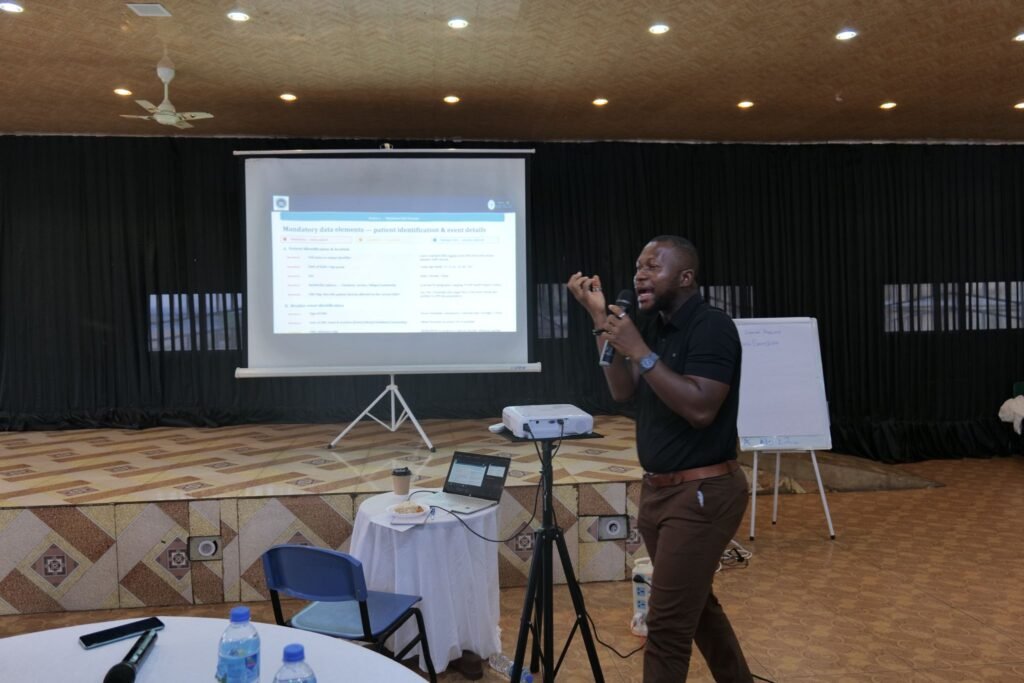
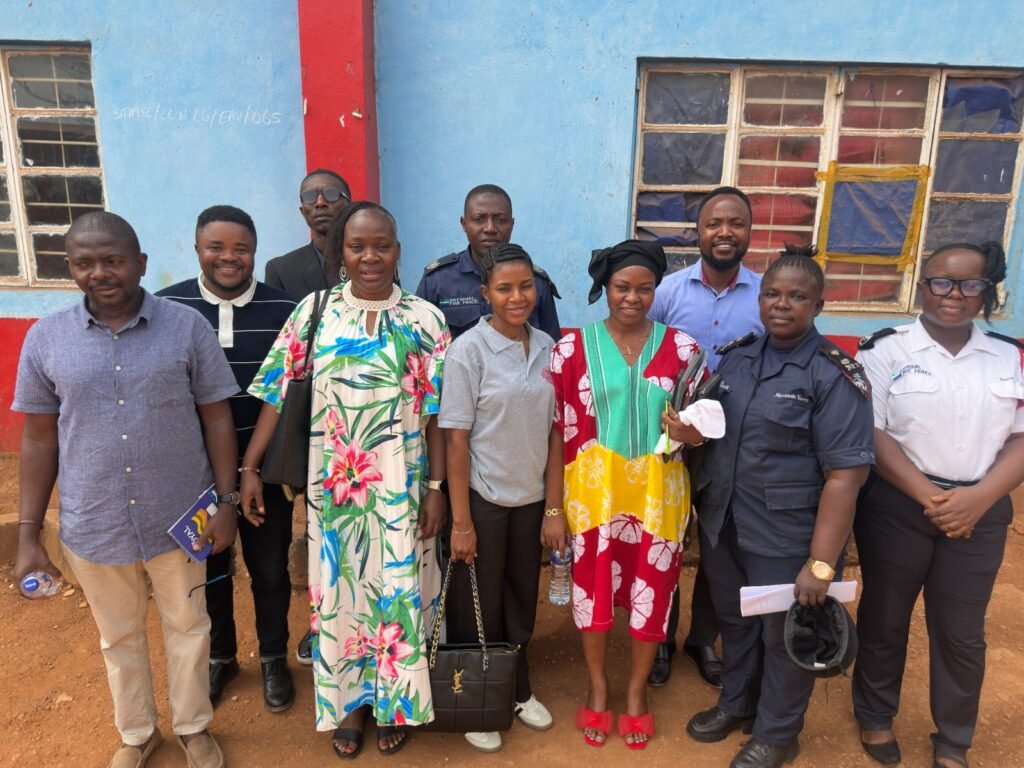
Stakeholders unite to protect communities during extreme weather events Freetown, Sierra Leone The Sierra Leone team of the Urban SHADE consortium conducted several workshops between May and June with various stakeholders, including state bodies, to roll out the project’s interventions. Government authorities participated actively in these workshops and are keen to see the interventions through. Urban SHADE focuses on improving health system delivery during extreme weather events in informal settlements. The intervention pilot brought disaster management authorities together with relevant health departments to build sustainable plans for health system preparedness in informal settlements. The workshops also helped formalise partnerships with stakeholders and clarify roles and responsibilities for all actors before, during, and after extreme weather events. The authorities involved in disaster management, early warning, and local administration include: • Sierra Leone Meteorological Agency (SL-MET) • National Disaster Management Agency (NDMA) • National Fire Force (NFF) • Freetown City Council (FCC) The health authorities included: • Ministry of Health, Climate Change Unit and the Health Education Department • National Public Health Agency (NPHA) • District Health Management Team (DHMT) Some of the key activities planned during the workshops for health-related outputs include: • Co-Developing a response checklist for health professionals • Co-Developing a disaster response plan for frontline workers • Preparing IEC materials and infographics to raise awareness of health and climate emergency response. These are mainly pictorial and produced in English, and will be validated by the community and subject experts, with a plan for distribution across public health units and other community channels • Co-creating a communication plan for early warning messages that uses existing channels (CDMC WhatsApp group, megaphones, door-to-door outreach, visual alerts, and so on) The Urban SHADE consortium thanks all the state actors for their active cooperation.
Events, Uncategorized

A safe space for a stronger, resilient community

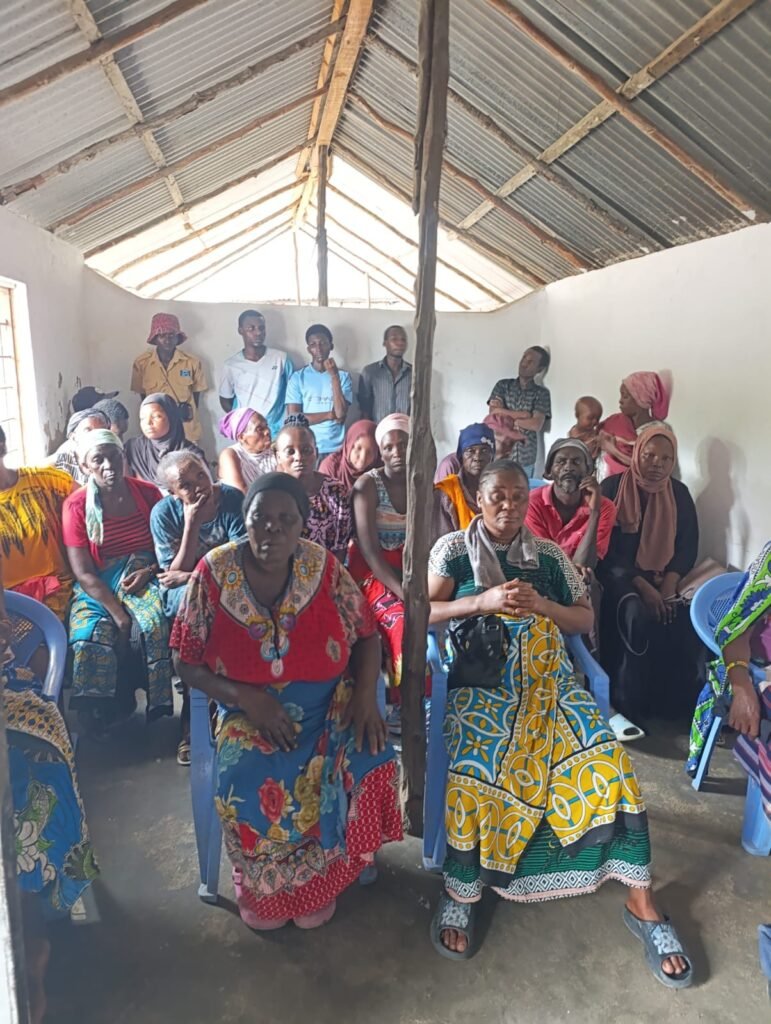
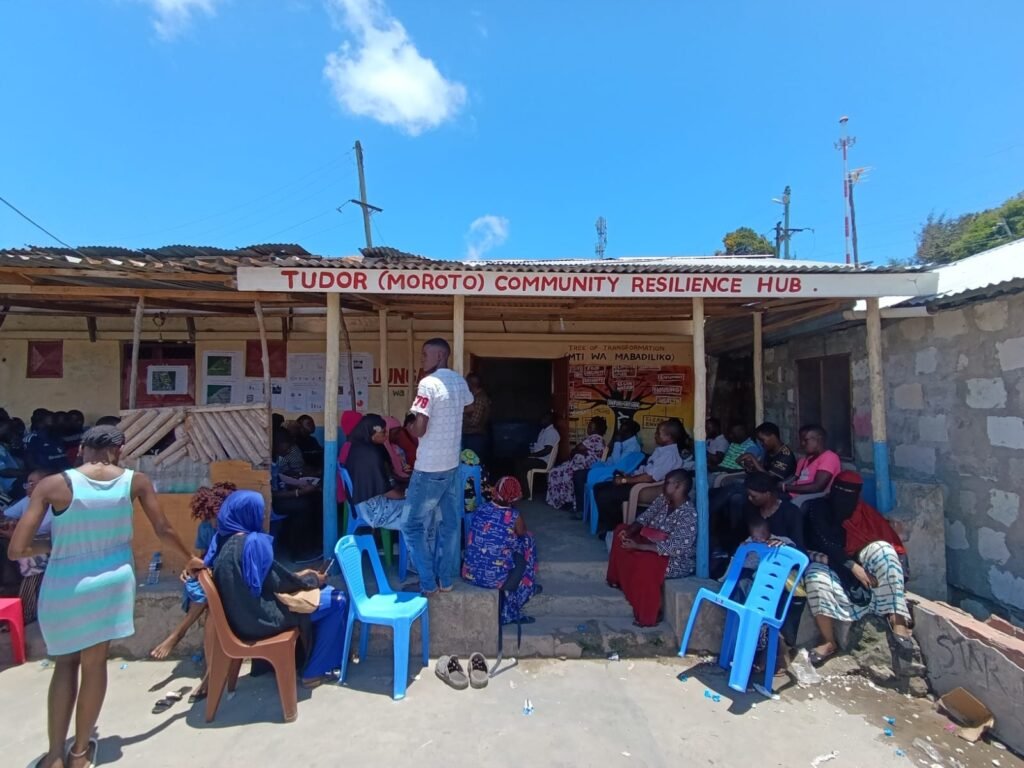
A safe space for stronger, resilient community Tudor Moroto, Mombasa A building within the informal settlement of Tudor Moroto in Simintini village has been adopted as a Resilience Hub. This Hub serves as a community centre, and is supporting community-led activities such as meetings, talks and will be developed as shelter space during extreme weather events.  The community members had expressed the need to establish a resilience hub to the Urban SHADE team in SDI Kenya during the initial research period in 2025 where the team members conducted several meetings to understand the health risks during extreme rainfall and flooding. The Urban SHADE team has advocated extensively for a health outpost in this area with Mombasa County. The Mombasa county health officials have conducted an inspection of the Resilience Hub built within Tudor Moroto to consider whether a health outreach facility can be built within the community. The county government is yet to submit a report on the same.  This space was identified after meetings with community leaders and negotiations with some members who were using the empty space for selling alcohol. After negotiations with the people who occupied this space, the community has taken ownership of the building and made it into a Resilience Hub. It’s a one-storey building with three rooms and empty open space.  “We had meetings with the village elders who identified this community space. It was earlier abandoned and during the night people used to sell liquor there. The elders and community leaders negotiated with the people who used the space at night to take their business elsewhere  so that the community can benefit from empty space,” said Bessie Sarowiwa, field officer with SDI-Kenya.  The idea for the Resilience Hub was sparked by the Tudor Moroto community, facilitated by SDI-Kenya and is now championed by the Muungano wa Wanavijijij, a social movement of people living in informal settlements in Kenya. The hub is being used by the community to hold meetings and discuss various issues concerning them including those under the Urban SHADE project and discussing further interventions. In Tudor Moroto, the houses near the Indian Ocean often get flooded during extreme rains. The community is envisaging this space as a safe shelter during such events. With small improvements to roofing, walls, and floors, the building can be a safe space during extreme weather events, such as floods, or extreme heat. SDI-Kenya with Muungano is looking to partner with organisations that can help provide food rations, blankets, medications which can help create a shelter space during extreme weather events.  With the removal of alcohol sellers in the area, the space has now become safe for families. It is now a space where children play during the evening, and women sit around and chat with their peers watching over children. The community is seeing a huge potential for developing this space further, especially a proper playground for children. The community is also clearing the pathway to the hub actively. The community members including men, women and the youth have been regularly coming together to clear and improve pathways leading to the Resilience Hub. The work includes clearing and levelling the pathway with saruji (crushed stones) as well as covering the sewers along the route. These cleaning exercises will help make the route to the Resilience Hub more accessible to everyone in the community, especially children, elderly, and persons with disabilities.  “It is critical that once the County government is ready to provide health services through this Hub, the access roads are better,” said Michelle Koyaro, Research Manager with SDI-Kenya.  The team is also co-designing public health modules for health workers related to extreme heat and extreme rainfall.  SDI Kenya is working with a consortium of organisations which are supporting youth leaders to be trained in supporting community mental health needs.  “The mental health needs are coming out strongly in our meetings with the community. There are feelings of hopelessness during and after extreme weather events. We are working towards embedding mental health aspects with flood and heat management,” said Koyoro. She added that there is buy-in about including mental health in the modules and training for health workers.  (With inputs and photos from Mejuma Mwamunga and Blonada Mwende)

Events, Uncategorized

Consulting with stakeholders in Freetown

Consulting with stakeholders in Freetown Starting this February, the Urban SHADE team in Sierra Leone conducted meetings with various stakeholders to discuss the interventions of the project. The Urban SHADE Sierra Leone partners include Sierra Leone Urban Research Centre (SLURC), Institute of Gender and Children’s Health Research (IGCHR) and The Centre of Dialogue on Human Settlement and Poverty Alleviation (CODOSAPAH).  The teams engaged with institutions mostly government-based that work directly with climate risk management, disaster preparedness and health systems in Sierra Leone at national and city-level. The Urban SHADE team presented the findings of the project on how extreme weather affects people living in informal settlements, particularly their health. The Urban SHADE team will co-design interventions with communities and stakeholders to find interventions that are practical, scalable and sustainable.  The organisations the team met are: Sierra Leone Meteorological Agency (SL MET), National Disaster Management Agency (NDMA), Ministry of Health, National Public Health Agency (NPHA), District Health Management Team (DHMT), Freetown City Council (FCC), National Early warning and Response Mechanism Coordinating Centre (NEWRMC) and National Fire Force (NFF).  While the Urban SHADE team appealed to the stakeholders for their support in further activities, it also became increasingly clear that effective responses to climate-related health challenges require strong coordinated multi-sector collaboration. The Urban SHADE team is gearing up to form a Stakeholder Working Group which will include representatives of these stakeholders and will aim to coordinate effectively in the future.  The Urban SHADE team will share these research findings and proposed interventions with the three communities (Susan’s Bay, CKG, Moyiba) and seek suggestions from the community as well, and representatives and leaders from these communities will also be part of the Stakeholder Working Group. The Urban SHADE team will have workshops with the Stakeholder Working Group where the interventions can be co-designed, and particular roles and responsibilities of different stakeholders during extreme weather events (extreme rainfall and extreme heat) can be clarified. The team is currently in the process of formalising partnerships with these stakeholders through Memoranda of Understanding (MoUs). 

Events

Community meetings in Kenya on proposed interventions

Consulting the community on proposed interventions in Kenya The Kenya team of Urban SHADE project is having community meetings explaining the findings, and talking about possible interventions.  The intervention proposed for all three communities– Tudor Moroto and Matopeni in Mombasa and Mibuyu Saba in Kilifi is co-designing training modules and protocols for health workers and community health workers with the health department on flood and extreme heat management.  One of the additional proposed interventions for Mombasa’s Tudor Moroto is the establishment of a community resilience hub which is intended to serve both as a community health facility, as well as a community centre. The proposition is that this hub can help increase access to healthcare during extreme weather events as well as become a hub for community meetings, support community activities and interventions and also serve as a rescue centre during disasters. The Urban SHADE team had several meetings with the community members starting with the local administration and village elders in February to get their buy-in on the interventions and support in mobilizing and organizing the community meetings. In the community meeting at Simitini village in Tudor Moroto, there was a discussion on the access road to the identified building for the resilience hub. The access road is currently narrow, and rudimentary. The access road to this building also becomes too muddy after the rains. The community members said that if they have the right material, such as cement, they can fortify the access road. They were unsure about involving the government as there were worries that the government could ask people to move out of their homes, without compensating them. On developing modules for health workers to tackle health-related issues of flood and heat, the community members from all three settlements said that they would like community members to be also involved in the training workshops and other activites related to disaster management, and health-related interventions. The Urban SHADE team will discuss this further in stakeholders meetings which are underway.

Events

Consulting with the communities

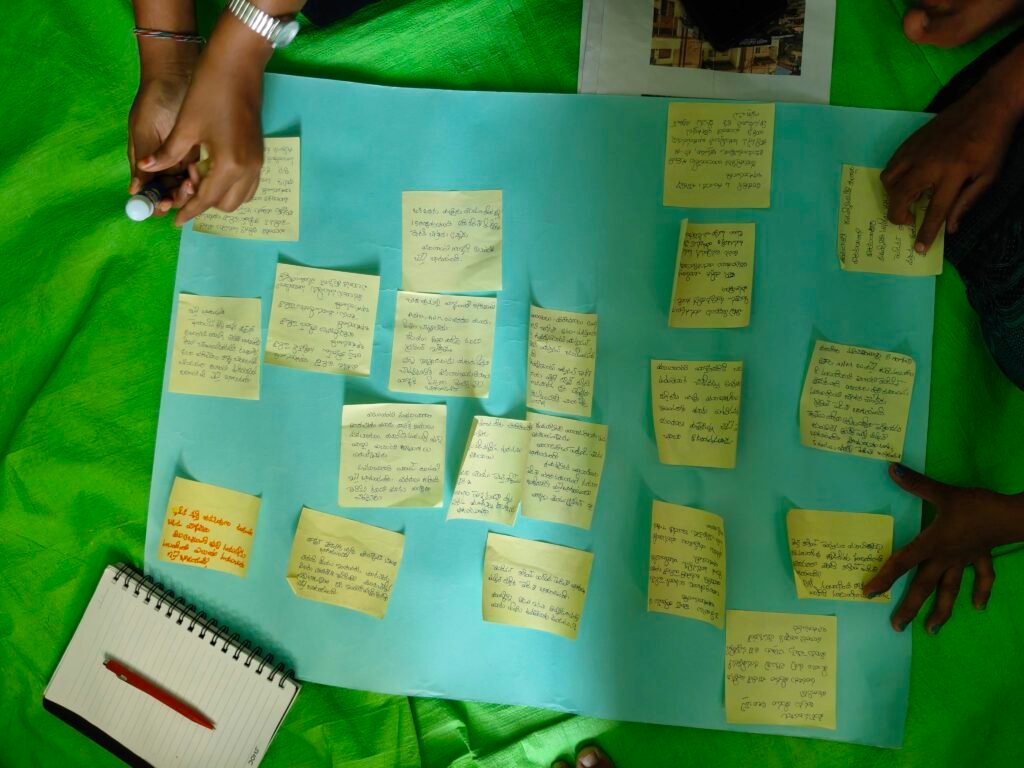
Consulting with the communities “What did you have for tiffin (breakfast)?” This question brings a smile to the faces of the people sitting in for community meetings of the Urban SHADE project. In these meetings that started in February 2026 are conducted in the community, the Vijayawada-Guntur team and the Shimla team discuss the findings and the proposed intervention of the Urban SHADE project.  The meetings have been set up in people’s houses within the community which they have generously opened for the Urban SHADE team, despite houses being small and cramped. In Guntur and Vijayawada, the hosts removed the cot from the house to make space for the duration of the meeting. In Shimla too, a friendly person’s house, public spaces such as grounds, or Anganwadi centres or even the lobby of a residential building were used for these meetings.  We are grateful to everyone who helped us organise these meetings. The meetings were conducted with different groups from different sites of the settlement- women, old persons, persons with disabilities, outdoor workers and those with chronic illnesses. In Shimla, meetings were also determined by the location- such as upper part of settlement, and the lower parts, and some occupational groups such as municipal sanitation workers. In Vijayawada and Guntur, the team hung relevant photos and distributed some photos among the participants that helped spark discussion among them. There were photos of cracked walls of houses, hospitals, garbage on the road, newspaper headlines of floods, flood warning messages or illustrations depicting heart illness among others. This technique helped a great deal in communicating the findings of the qualitative research including focus group discussions and in-depth interviews, especially since many of the participants were illiterate or semi-literate. Persons who participated in these meetings discussed the garbage in their areas, what happened during the floods, or their experiences in public hospitals or private clinics. Many people who attended the meetings said that they saw the messages sent by the government on flood warnings for the first time. They spoke about how they barely got food or water during the heavy floods in 2024. The community members also suggested their ideas for possible interventions.  In Shimla, the team presented an illustrated flow chart with the findings, gaps and the planned intervention activities. The team explained that the qualitative study presented cardiovascular diseases, musculoskeletal problems, skin disease, alcohol and drug addiction as problems facing the community. There are also increased out-of-pocket expenditures due to lack of ambulances and unavailability of medicines in government hospitals. The distance of the hospitals deters people from going there, especially older persons who are unable to walk up to main road, often leading to them missing out on follow-ups. Both informal settlements in Shimla do not have functional Primary health centres. Pregnant women and children have to go to hospitals further away to get basic check-up or immunisation. People reflected on how they are unable to sleep when during heavy rains. While they do get flood messages, they have no idea what action should be taken. The team also presented a general lack of awareness about the diseases caused due to extreme rainfall, and suggested interventions. These meetings helped validate the findings and also get buy-in from the community for the intervention activities still being planned. In Andhra Pradesh the team includes researchers Pavani Pendyala and Hemanth Chandu, field coordinator Satyanarayanamma Methukulla and community co-researchers Dasari Madhavi and Maddela Siva Parvathi. In Shimla, the team includes researchers Inayat Singh Kakar, Dr Yetika Dolker, and field coordinator, Sahil Kumar. 

Events

The Urban SHADE Annual General Meeting 2025

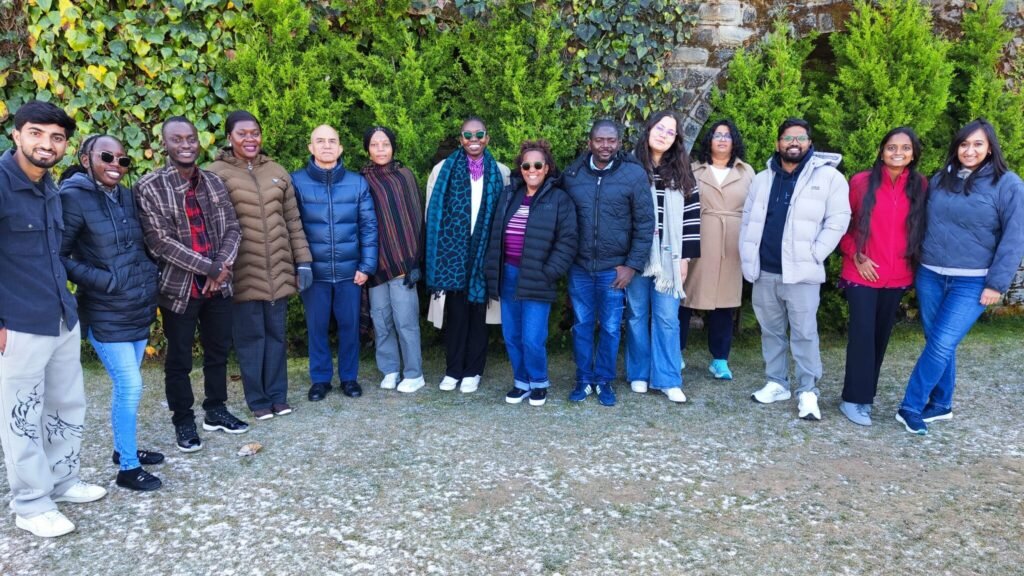
The Urban SHADE Annual General Meeting 2025 On November 25, we kicked off the first Urban Shade Annual General Body Meeting in Himachal Pradesh’s Mashobra in India. Colleagues from Sierra Leone, Kenya, UK travelled to India for the meeting. It was a week of reflections on the field work on how extreme weather events impact health and health systems in relation to people living informal settlements.  Menaka Rao, the project communications lead kicked off the week with a communications workshop focused on the kind of stories that can be told from fieldwork as part of communication dissemination. Some of the writing from this workshop is published here.  The Urban SHADE members from all three countries presented Case Studies of the settlements the project is working with.  Across the three countries, communities who experienced heat stress and extreme rainfall felt that the health systems were falling short and communities devising their own ways to cope with effects of climate change. The Principal Investigators (PIs) gave them different perspectives on how to understand the effect of climate change in the health of communities. Dr Rachel Tolhurst from Liverpool School of Tropical Medicine (LSTM) urged teams to think through the Intergovernmental Panel on Climate Change (IPCC) framework on risk and vulnerabilities to think about the vulnerabilities and risks faced by the informal settlements in each of the countries.  Dr Surekha Garimella from The George Institute of Global Health in India spoke about the structured approach of Process Evaluation as a way to assess the effectiveness of the implementations.  Dr Jiban Karki talked to the teams about the monitoring, evaluation and learning – MEL- framework for the Urban SHADE project. Dr Ijeoma Onyeahialam discussed how the framework of Theory of Change will help the teams shape their interventions better. The teams also presented possible interventions, which were sharpened over a period of days to become more specific and realistically possible to implement in this year. The team went to Krishna Nagar on a field trip. The had a walk-around in the settlement, and also had a meeting with community leaders of Krishna Nagar and community health workers in the Valmiki temple there. After the meeting, the teams focused their energies on the Writing workshop conducted by the PIs. The workshop ended on December 5 with all the teams decided the topics on which they can write papers based on their field work. 

Events, India

Enumerators workshop India

September 2025 Household Survey Enumerators workshop, India  The Urban SHADE project in India conducted a training of enumerators for conducting the Household Survey: Social and Health Vulnerability Assessment in September. The workshops were held first in Vijayawada and then Shimla in five-day spans between September 8, 2025, to September 22, 2025.  In both the workshops, the research team conducted a focus group discussion with the enumerators to get a pulse on their understanding and knowledge about the different informal settlements we are studying, impact of extreme weather events in such settlements among others. Many of the enumerators who had prior experience conducting surveys participated wholeheartedly on their understanding of extreme weather events, and the various challenges in conducting surveys in the field.  The research team including Hemanth Chandu, Malini Aisola, Inayat Kakar and Yetika Dolker explained to the enumerators about the Urban SHADE project and broadened their understanding of extreme weather events and how it affects people with different vulnerabilities especially the poor who live in informal settlements, disabled, or those with precarious jobs, or with chronic illnesses differently. Each section of the survey, and their questions were explained to the enumerators. The sessions covered Ethics related to data collection in great detail. It was emphasised that the data collection must be implemented consistent with the principles of the Human Rights Based-Approach to Data. The research team spoke about maintaining confidentiality and privacy of the people who will be asked questions from the questionnaire. The enumerators were made aware of the gender and cultural norms that could come to play while conducting the survey. The research team also highlighted that data collection should not lead to further discrimination among the already marginalised communities that the Urban SHADE project works with.  The interviewers were given detailed instructions on preparing for the survey, introducing themselves, obtaining consent, and taking a survey. The participants were given mock practice sessions where one of them played the respondent and other played the enumerator.  The situations included dealing with a busy mother who had no time, or a person concerned about the survey leaking information to the government. The situations which were designed to be tough helped the enumerators practice their skills in seeking consent and trying to convince people for a survey by being transparent and respectful. The role-playing activity broke the monotony of the typical workshop with presentations.  Balaji Rao Nemala gave hands-on training on how to map settlements where the survey is to be conducted. Nemala (photo below) who is the Project Manager with The George Institute, has handled trials all over India in both urban and rural settlements. Mapping literally means drawing a map of the settlement on paper. Nemala guided the enumerators in the field on how to map the structures in a way that they do not miss a single house. This exercise gets complicated in informal settlements, which barely have any straight paths. In Shimla this was compounded by the fact that the settlements are on hilltops which required a lot of physical labour of climbing up and down the hilltops. The enumerators covered the length and breadth of the settlements marking structures in each of the narrow lanes of the settlements. The people in the settlements who were curious about the exercise asked them about it, giving the enumerators a chance to explain the survey to them.  Bijini Bahuleyan, Data Manager withThe George Institute made the data base for the survey which is to be conducted in Telegu and Hindi. She also helped participants log on RedCap software which will be used for data collection in the survey, and trained them on how to use the software for data collection.  The survey is expected to begin in October. In Vijayawada and Guntur informal settlements (Vambay Colony, RR Peta and Sarada Colony), the survey will be conducted in Telegu. In the Shimla informal settlements (Krishna Nagar and Eidgah colony), the survey will be conducted in Hindi.

Scroll to Top