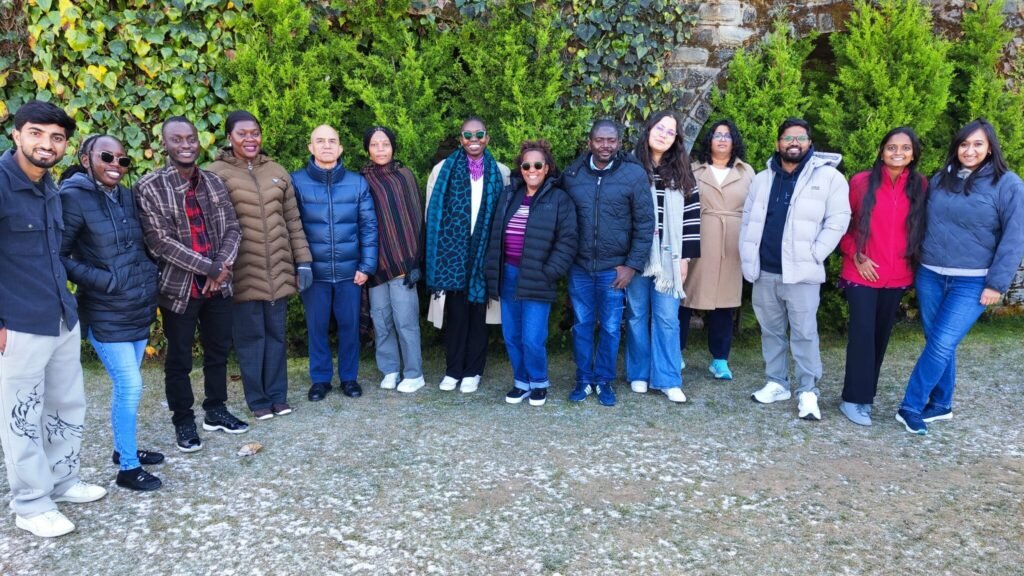
Urban SHADE project in ICUH, Mexico city!

The members of the Urban SHADE consortium are presenting in the International Conference on Urban Health (ICUH) in Mexico city from October 13-17, 2026. Those interested in questions related to climate change, public health and informal settlements, please attend these sessions and participate in them. The main conference programme will be held at Tecnológico de Monterrey’s Mexico City Campus
Here are the sessions that Urban SHADE members are presenting:
Strengthening health service provision in extreme weather: sharing experiences, strategies, resources and tools (60 min)
Date: Wednesday, 14th October,
Time: 12:30 to 13:30
Venue: 07 SUM 2 101
Presenters: Dr Abu Conteh, Inayat Singh Kakar, Dr Ijeoma Onyeahialam (Urban SHADE team members from Sierra Leone, Kenya, India, and UK)
Abstract:
The health impacts of climate change will be concentrated among the poorest urban populations, particularly the one billion people living in informal settlements. How to reduce these health risks through strengthened health service delivery which is responsive, equitable and people-centred is currently unclear, and the impacts of extreme weather on health service provision in informal settlements have not been widely researched.
This interactive workshop provides a space for sharing experiences of the impacts of extreme weather on health service provision and how these can be addressed through co-designed interventions. Drawing on our participatory action research in the Urban SHADE project in informal settlements in India, Sierra Leone and Kenya, we will create a space for sharing, discussion and co-learning from three key stages of our participatory action research.
Framework to understand cascading health impacts of compound extreme events in informal settlements. Moving beyond a ‘disaster framework’ for extreme rainfall and flooding.
Date: Thursday 15th October
Time: 12:30-13:30
Venue: 07 SUM 2 101
Presenters: Dr Surekha Garimella, Inayat Singh Kakar, Menaka Rao (Urban SHADE India team), Arijit Sen Thakur (Himachal Pradesh State Disaster Relief Force, India), Dr Ijeoma Onyeahialam, Liverpool School of Tropical Medicine, UK
Historically, weather disasters are seen as rare, singular, discrete events. But for the past few years, there has been increased focus on compound weather and climate events, their risks and cascading impacts. Extreme weather has cascading impacts on health, creating and exacerbating health vulnerabilities. Current disaster management frameworks are not equipped to address public health challenges that arise from the cyclical nature of extreme weather and its compounding impacts. Findings from our Urban SHADE study reveal that impacts of rainfall, not technically defined as ‘extreme’, can compound and be felt as ‘extreme’ for people already facing vulnerabilities to life, livelihoods, housing and other social determinants of health. The Urban SHADE project finds that in mountainous and ecologically sensitive regions such as Himachal Pradesh, India the entire monsoon period is extreme weather event prone, and governments need to prepare for impacts of extreme weather as cyclical events during the entire monsoon season.
This is a panel discussion looking at a framework to reduce public health risks for those living in informal settlements that takes into consideration the frequent shocks to the administrative and public health systems and the community stakeholders and tries to imagine a framework that goes beyond disasters and focuses on cascading public health impacts on urban marginalised communities.
How inclusive are extreme weather communication materials- a case study from India (Oral Presentation)
Presenter: Menaka Rao, Project Communications Manager, Urban SHADE
Date: Thursday 15th October
Time: 15:00-15:15
Venue: 02 BIBLIOTECA SALA 201 – Side A
Effective health communication during disasters can impact how a community prepares, responds and recovers from extreme weather events. At the Urban SHADE project, we examined and analysed the communication materials (video and text format) produced by Indian central and federal bodies including guidelines and advisories directed towards increasing resilience and adaptation of the public during extreme heat and floods (including cyclone and landslides). The presentation will present a content and discourse analysis that identifies, strengths, gaps, narratives and discourses in the state-produced IEC material.
Some of our consortium partners are also presenting their work on the Urban TRACS project that also works on climate change and resilience. Here are the details of the Urban TRACS presentation:
From Community Voice to Climate-Smart Housing Construction: Applying the Roof Over Our Heads Framework in Informal Settlements in Sierra Leone and Kenya” (Oral Presentation)
Date: Thursday, 15th October
Time: 11:15 to 11:30
Venue: 02 BIBLIOTECA SALA 201 – Side A
Presenters: Ansumana Tarawally, Milka Kori
Poor housing conditions in informal settlements amplify exposure to flooding, extreme heat, and landslides, detrimentally affecting health and well-being. Participatory action research project, Urban TRACS, has applied the Roof Over Our Heads (ROOH) approach to co-produce demonstrable climate-resilient housing solutions that are acceptable, locally-accessible and affordable for residents of informal settlements. This session presents the findings from this work across contrasting settlements in Freetown and Kenya. Presentations begin by examining the relationship between housing and heat and rain before sharing learnings from co-design processes and the evaluation of housing adaptations. Throughout, we share differential experiences of repairing, retrofitting and rebuilding housing and reflect on the affordability gap for the most vulnerable. This work provides important climate-adaptation evidence from West and East Africa.