
extreme weather events

Blog, Uncategorized

Living with diabetes during extreme heat

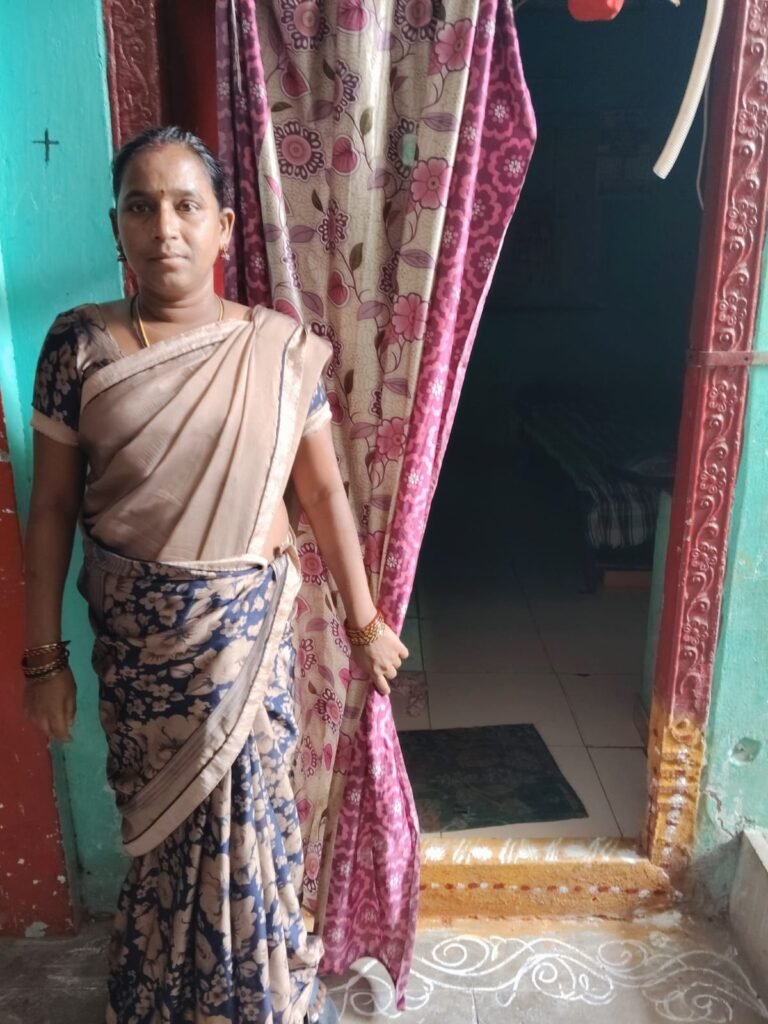
Living with diabetes during extreme heat Hemanth Chandu By 11:00 AM in the morning, 32-year-old Sandhya sits outside her home with her female neighbours sitting under the tree shade. The women chat and laugh, relieved to escape the March summer heat inside the house. Within hours of sunrise, their two-room flats in the government constructed apartment in New Rajarajeshwari Peta in Vijayawada feels like a pot on a stove. “Ee vadagaalpula valla intlo baaga aaviri vachesthundi. During this hot summer, the heat builds up in the house like steam. I find it difficult to breathe sometimes,” she says. But Sandhya, it’s more than just physical discomfort. She has diabetes and feels her condition worsen during the summer.  About 57 percent of Indian districts, home to 76 percent of the country’s population, are at high to very high heat risk, a 2025 study by Council on Energy, Environment and Water (CEEW) showed. Andhra Pradesh is one of the top most heat-prone states. Vijayawada and Guntur, where the Urban SHADE  project works, are at very high risk of heat risk. Extreme heat is known to exacerbate health risks of diabetics. 77 million adults live with type-II diabetes in India. Studies done from some countries have shown that higher temperatures are linked to diabetes related complications related to cardiovascular or renal ailments among others, increased hospital visits and mortality risk, as the body struggles to regulate itself under heat stress. For Sandhya and other residents of informal settlements, who are already more vulnerable to the effects of climate change, the additional burden of having diabetes poses further risk. Mounting health problems A couple years ago, Sandhya used to run a food cart cooking and selling breakfast items such as dosa and idli, when she met with an accident. Hot oil spilt on her leg, and refused to heal for a long time. She finally had to go to a private hospital in the city where the doctors had to remove one of her toes. The surgery cost her Rs 1.2 lakhs which was borrowed from an informal lender for 10 percent interest. She continues to have a persistent wound.  “Everyday I put on the glove and do the dressing of this wound myself,” she said. She was first detected with diabetes when she was pregnant with her second child more than a decade ago. She goes to the Primary Health Centre near her house every month, where her blood sugar levels are checked and she gets her medicines. The PHC staff with whom around 200 diabetics are registered informed us that the blood sugar levels among the diabetics rises above their usual levels during summer.  Diabetes tends to place individuals at greater risk for heat-related illness during heat waves and physical activity due to an impaired capacity to dissipate heat, which can have an impact on cardiovascular health and blood sugar control. Those who already have poor glycemic control and are affected by diabetes related complications are particularly vulnerable. “I follow everything the doctor says. I take the medicine and follow the diet. But my sugar levels are never/often not  in control,” she says. Because of her uncontrolled diabetes and the persistent wound on her leg, Sandhya had to give up working outside home.  No relief at home Staying home provides little comfort. Though it is sometimes perceived that homes can provide protection, in informal settlements such as RR Peta, the indoor temperature is often higher than outdoors, a 2022 study showed. The qualitative study, which had RR Peta as one of its study sites, was led by architects trying to understand how the community copes with heat, and its coping mechanism to deal with heat stress. For roughly 17.4% of urban population living in informal settlements, this heat stress is far more acute. Houses in informal settlements are rarely built with thermal comfort in mind, leaving residents with limited access to cooling, clean water and heat alerts. Government affordable housing schemes continue to overlook basic passive cooling measures such as cross ventilation and insulated roofing and adequate shading making indoor temperatures as dangerous as outdoors during a heatwave.The minimum standards for constructing government affordable housing such as RR Peta is extremely low in the Indian context. In the tiny apartment, Sandhya lives with her husband and five children. The eldest who is a construction worker has moved out and lives with relatives. Two of her other older children work as delivery gig workers, while the youngest two still go to school.  Even basic household work is difficult for her now. “Even if I am sweeping the house, I need to rest for 15 minutes,”she says.   During summer, her legs swell, and she often gets headaches and back pain. She says,“This house barely has any ventilation and I end up sweating continuously while working. I have to do all the household work in this heat and through pain. It is so frustrating.” During the 2024 floods in Vijayawada when RR Peta was affected, their washing machine, fridge, and air cooler got destroyed. During these floods, homes were submerged, families displaced to relief camps, and livelihoods disrupted.  The machines are now sitting in the house like fossils for want of repair, as the family cannot afford to repair them. Meanwhile Sandhya has to wash the six people’s clothes and cook fresh meals everyday while trying to cope with the heat. Financial precarity Since Sandhya gave up working outside, her family finances have become precarious. The household depends largely on her husband Srinivas’s income. He is an autodriver and earns around Rs 10,000 per month.  Srinavas too feels the heat acutely while working, but brushes it off saying, “It’s common for us.” He has seen his own customers, mostly elderly people  faint in his auto.  He has pain in his right hand, but has not been able to tend to it, because of the family finances. The doctor had recommended a surgery (costing Rs one lakh) and rest for two months.  This was not

Events

Community meetings in Kenya on proposed interventions

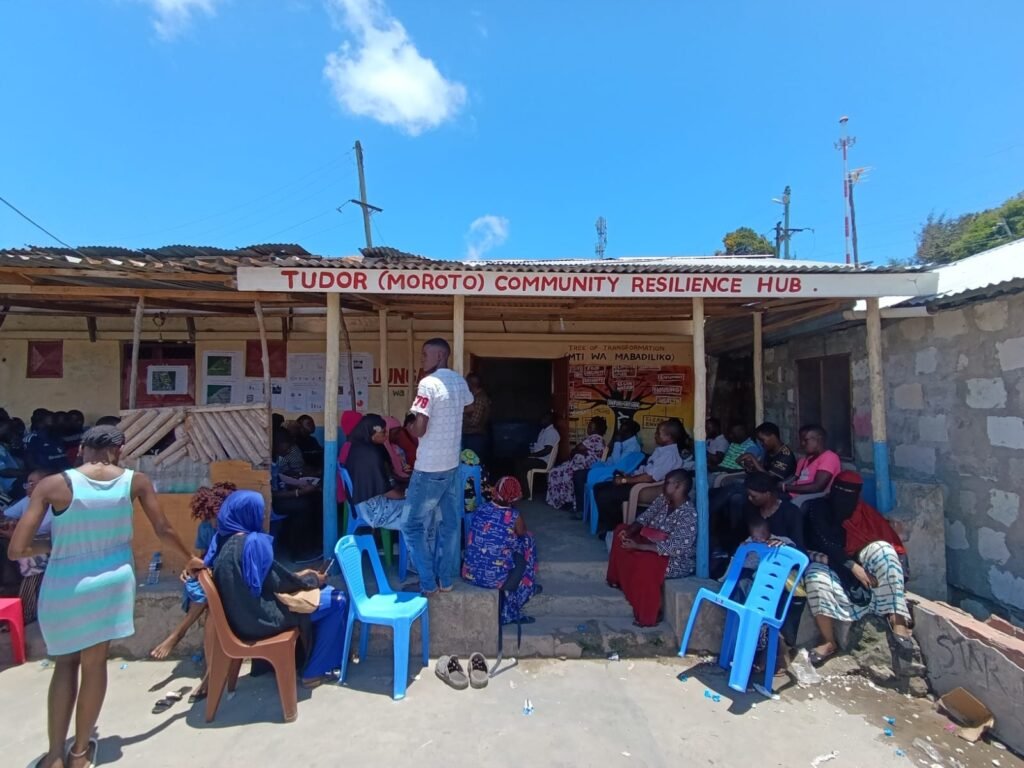
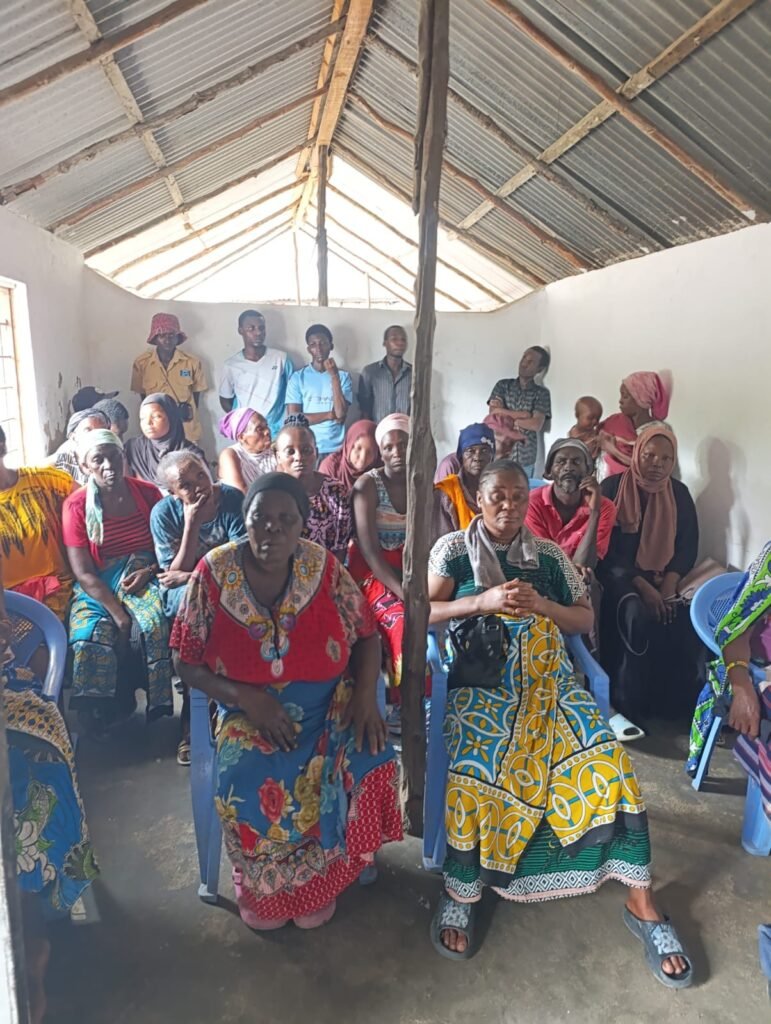
Consulting the community on proposed interventions in Kenya The Kenya team of Urban SHADE project is having community meetings explaining the findings, and talking about possible interventions.  The intervention proposed for all three communities– Tudor Moroto and Matopeni in Mombasa and Mibuyu Saba in Kilifi is co-designing training modules and protocols for health workers and community health workers with the health department on flood and extreme heat management.  One of the additional proposed interventions for Mombasa’s Tudor Moroto is the establishment of a community resilience hub which is intended to serve both as a community health facility, as well as a community centre. The proposition is that this hub can help increase access to healthcare during extreme weather events as well as become a hub for community meetings, support community activities and interventions and also serve as a rescue centre during disasters. The Urban SHADE team had several meetings with the community members starting with the local administration and village elders in February to get their buy-in on the interventions and support in mobilizing and organizing the community meetings. In the community meeting at Simitini village in Tudor Moroto, there was a discussion on the access road to the identified building for the resilience hub. The access road is currently narrow, and rudimentary. The access road to this building also becomes too muddy after the rains. The community members said that if they have the right material, such as cement, they can fortify the access road. They were unsure about involving the government as there were worries that the government could ask people to move out of their homes, without compensating them. On developing modules for health workers to tackle health-related issues of flood and heat, the community members from all three settlements said that they would like community members to be also involved in the training workshops and other activites related to disaster management, and health-related interventions. The Urban SHADE team will discuss this further in stakeholders meetings which are underway.

Musings, Uncategorized

The Combermere nalla

The Combermere naala Inayat Singh Kakar The Combermere naala is one of the five natural streams that flow down central part of Shimla city. These streams are natural drainage channels that carry excess water down the mountainsides. The Combermere naala originates mid-way on the Jakhu hill, making its way down the hillside to form the Eastern boundary of our field site, Krishna Nagar and ends at Lal Pani where taxi drivers use the water to wash their vehicles. Old pictures of Shimla city show the naala flowing down pristine hillsides. Now when you hear the gushing of the water, you see a channel choked with garbage. The water tumbles over the garbage, desperately makes its way down, slowly changing its path as it cuts through the hillside. As the naala reaches Krishnanagar it becomes even more choked with garbage. Krishnanagar’s residents whose houses are constructed along the naala describe it as a health and safety hazard. In the summer, the wet garbage cooks in the harsh sun and becomes a swampy breeding ground for flies and mosquitoes. In the rains, the water thunders down the hillside, gushing so loud that it keeps nearby residents awake from the anxiety of flooding. Ramu, whose house is built right next to the naala says that he is afraid it will one day sweep his house down with it. He says that infrastructure built by the Municipality has created choke points in the path of the naala, instead of towards the end of its course at Lal Pani (near where the 2023 landslide took place) where it could be cleaned regularly. Right now, the choke points which are inaccessible to human beings. The naala is built in a way that it gets obstructed, and damages the hillside where Krishnanagar is located, increasing risk of landslides. With a sigh, Ramu says that the story of the naala is emblematic of a cruel irony faced by the residents of Krishnanagar, home to the majority of city’s sanitation workforce.

Events

Consulting with the communities

Consulting with the communities “What did you have for tiffin (breakfast)?” This question brings a smile to the faces of the people sitting in for community meetings of the Urban SHADE project. In these meetings that started in February 2026 are conducted in the community, the Vijayawada-Guntur team and the Shimla team discuss the findings and the proposed intervention of the Urban SHADE project.  The meetings have been set up in people’s houses within the community which they have generously opened for the Urban SHADE team, despite houses being small and cramped. In Guntur and Vijayawada, the hosts removed the cot from the house to make space for the duration of the meeting. In Shimla too, a friendly person’s house, public spaces such as grounds, or Anganwadi centres or even the lobby of a residential building were used for these meetings.  We are grateful to everyone who helped us organise these meetings. The meetings were conducted with different groups from different sites of the settlement- women, old persons, persons with disabilities, outdoor workers and those with chronic illnesses. In Shimla, meetings were also determined by the location- such as upper part of settlement, and the lower parts, and some occupational groups such as municipal sanitation workers. In Vijayawada and Guntur, the team hung relevant photos and distributed some photos among the participants that helped spark discussion among them. There were photos of cracked walls of houses, hospitals, garbage on the road, newspaper headlines of floods, flood warning messages or illustrations depicting heart illness among others. This technique helped a great deal in communicating the findings of the qualitative research including focus group discussions and in-depth interviews, especially since many of the participants were illiterate or semi-literate. Persons who participated in these meetings discussed the garbage in their areas, what happened during the floods, or their experiences in public hospitals or private clinics. Many people who attended the meetings said that they saw the messages sent by the government on flood warnings for the first time. They spoke about how they barely got food or water during the heavy floods in 2024. The community members also suggested their ideas for possible interventions.  In Shimla, the team presented an illustrated flow chart with the findings, gaps and the planned intervention activities. The team explained that the qualitative study presented cardiovascular diseases, musculoskeletal problems, skin disease, alcohol and drug addiction as problems facing the community. There are also increased out-of-pocket expenditures due to lack of ambulances and unavailability of medicines in government hospitals. The distance of the hospitals deters people from going there, especially older persons who are unable to walk up to main road, often leading to them missing out on follow-ups. Both informal settlements in Shimla do not have functional Primary health centres. Pregnant women and children have to go to hospitals further away to get basic check-up or immunisation. People reflected on how they are unable to sleep when during heavy rains. While they do get flood messages, they have no idea what action should be taken. The team also presented a general lack of awareness about the diseases caused due to extreme rainfall, and suggested interventions. These meetings helped validate the findings and also get buy-in from the community for the intervention activities still being planned. In Andhra Pradesh the team includes researchers Pavani Pendyala and Hemanth Chandu, field coordinator Satyanarayanamma Methukulla and community co-researchers Dasari Madhavi and Maddela Siva Parvathi. In Shimla, the team includes researchers Inayat Singh Kakar, Dr Yetika Dolker, and field coordinator, Sahil Kumar. 

Musings

Nowhere to go

Nowhere to go Dr. Abu Conteh It’s 12pm on a bright beautiful Monday morning, and the sun is beginning to get ahead of me. I am visiting the Soja town section of the Moyiba community to talk to Sia, whose house was recently destroyed by a mudslide. Moyiba is one of the most deprived informal settlements in Freetown, which is also exposed to multiple hazards including mudslides. Sia is a single mother of three who makes a living from stone mining. As I ascend the over 600-meter-high hill, I couldn’t help but wonder how women in this rugged part of the community deal with climate hazards and access healthcare. In the past years, women in this section of the community have had to deliver babies by the side of the road as they couldn’t make it to the only government health clinic in time about 3 kilometers away. Transportation here is a challenge, as motor bike riders complain of rugged roads. As I arrive at Sia’s home, she greets me warmly and offers me a seat in her delipidated single bedroom mud house that was destroyed by a huge boulder (in 2025). The house is now a relic of the original two-bedroom house built by her husband who died two years ago. “The destruction of the house has changed my life so badly”, she said. She recounted her daily horrors of having to live in a leaking house or rebuilding it withher meagre income. “I can barely feed by children, let alone rebuild this house.” As I looked around, I could see that most houses here are built with mud bricks, which makesthem vulnerable to extreme weather events such as flooding and mudslide. Sia recounts she is not the only woman affected. ‘‘Last year, one woman lost two children because of a mudslide,” she said. While she feels the community is not safe, she is worried about having to leave a whole life behind that she has built for over a decade. ‘‘I have nowhere to go. We are not offered any help by the ‘’big ones.’ No one has helped me since my house got destroyed,” she said.

Musings, Uncategorized

No future

Menaka Rao Ashu waited for me outside the hotel. He is a skinny man, and was visibly uncomfortable standing in the lobby of the hotel. He insisted on meeting me in the hotel, and not in Krishna Nagar, where he lives. He says his father was a municipal waste worker. But he drank so much that the children could not go to school. Ashu dropped out of school in his 7th standard. He became a contractual waste picker after his father’s death.  “There is no future in this work, Madam,” he told me, shaking his head. He feels the futility of his job, while not being able to see a way out. “I just don’t want to go to work, especially during the monsoon. The waste which I carry on my back just gets right into my clothes and trickles down my body. There is dal, curry, all kinds of food,..,” he said, trailing off and making a face full of disgust. His school-going son asked him one day why he did waste work. “I felt very bad that day,”he said. During one monsoon, about ten years ago, his family had to leave the house, built by his grandfather, because it got dangerous. The floor of his house cracked further and further, threatening to collapse. “We kept thinking the floor would stop caving, but it kept getting worse,” he said. They now live in a rented premise, cutting into their meagre income. So when he fractured his leg this year because of an accident at work, he had to borrow nearly Rs 20,000. He was out of work for three months.  “There is no future in this work, madam,” is his only refrain.

Blog

Lessons from margins: Insights from visit to Shimla’s Krishna Nagar

Lessons from margins Insights from Urban SHADE team visit to Shimla’s Krishna Nagar Looking at the paved roads and cemented houses at the beginning of Krishna Nagar settlement in Shimla, the first reaction of Urban SHADE members from Sierra Leone and Kenya was- “This place does not look like an informal settlement.” Krishna Nagar is an informal settlement at the heart of Shimla city. The Urban SHADE consortium visited Krishna Nagar during the Annual General Body Meeting on November 30. The consortium members were first trying to size up the differences and similarities between their field sites and Krishna Nagar. The settlement was built during the colonial times to house waste workers and other labourers. People in Krishna Nagar do not have land tenure.  “The structures in Krishna Nagar looked stronger. The houses in our settlements are not as strong. In fact, even with a bit of heavy wind, the houses can be destroyed,” said Tena Kabba from Institute of Gender and Children’s Health Research (IGCHR) in Sierra Leone, which works with three informal settlements in Freetown for the project. The consortium members from Sierra Leone felt that Krishna Nagar with its steep slopes and steps resembled Moyiba a little.  But as the members walked down towards the lower part of the settlement which is right at the edge of the hill, the challenges became apparent. Though the houses look well taken care of, some of them even have a small garden in front of them, many of them have big cracks.  “My first thought was, is this really an informal settlement?,” said Michelle Koyaro from Slum Dwellers International, Kenya. “We then saw the housing conditions. The walls of many houses are full of cracks. It places them in a vulnerable state. They are not sure if they will be able to live in the house next monsoon. I realised that if someone does not know the context definition of informal settlement, they will quickly cancel Krishna Nagar as informal settlement. ” And indeed, many houses have collapsed at the edge of the hill during the 2023 landslide when the Slaughterhouse collapsed. The consortium members met a man who sent his family to his native place but continued to live in a house perched at the edge of the hill. He said he had no option because he had to make a living in Shimla.  What struck many Urban SHADE members is how much people invested in the houses. The houses are by and large cemented, and many have taken effort to even have a garden in a small strip of land. The roads in the upper part of the settlement were built by the municipal authorities. The consortium members then saw older persons trying to walk up the stairs, as well as houses with big cracks perched precariously at the extreme lower part of the settlement, at huge risk of being washed out by rains. Dr Jiban Karki, from Liverpool School of Tropical Medicine (LSTM) said that the lower parts of the settlement were revealing. “I visited Krishna Nagar twice. But this time we went further down, where we saw all the cracked houses. We found that people were still living there despite the danger. There was another vulnerable population who were living in rented houses. Towards the top of the hill in Krishna Nagar people were relatively better off, then those in the lower range.” Dr Karki spoke about meeting some Nepali origin people in the lower parts of the settlement who lived on rent, in houses that were more precarious. As the consortium members tried to climb up the stairs they realised how difficult it is. ”I kept thinking about how many elderly people live there. As young as I am, I was barely able to climb the stairs. Even if there is a car available, it is hard to get to the main road,” said Dr Desta Ali, from IGCHR. Many wondered how pregnant persons and those with disabilities climb stairs everyday.  Some of the Urban SHADE team members met an elderly lady who had great difficulty climbing a steep flight of stairs. She took breaks sitting down at the side of the stairs while walking up with a stick.She sought help from some teenagers passing by.  The consortium also saw the building of the primary health centre (PHC) which is currently non-functional. The older PHC which was there earlier collapsed more than a decade ago during the monsoon. The team from Sierra Leone and Kenya observed that they had a functional health facility within most of their settlements they are working with for the Urban SHADE project. The ASHA workers present in the meeting also raised various problems people in the community faced because of PHC.  Dr Ijeoma Onyeahialam, who works with LSTM observed, “In relation to Sustainable Development Goals (SDG), the community falls short because of the community’s lack of access to health care. The PHC is not working. After going into the community more, you can see how pregnant women are disadvantaged. This also helps various country teams to see how they can compare and see similarities.”  The consortium members also had a meeting with community leaders and ASHA workers at Valmiki temple said to have been established in the early 1900s. Valmiki is a patron saint for Dalits. The discussions ranged from lack of land tenure, caste discrimination and access to healthcare.  The community leaders of Krishna Nagar spoke about how the government keeps trying to evict them, as it falls on prime land. “Just before the elections, the political leaders promise that they will ensure we will be granted land tenure. But after elections, these promises vanish,” said Kuldeep, who is with the Valmiki Sabha  The teams from Sierra Leone and Kenya said that it’s just the same situation in their hometowns with informal settlements. Except, the people working in the settlements there refrain from investing their money in building a better house because of the fear of eviction.  “People

Musings, Uncategorized

Bahari

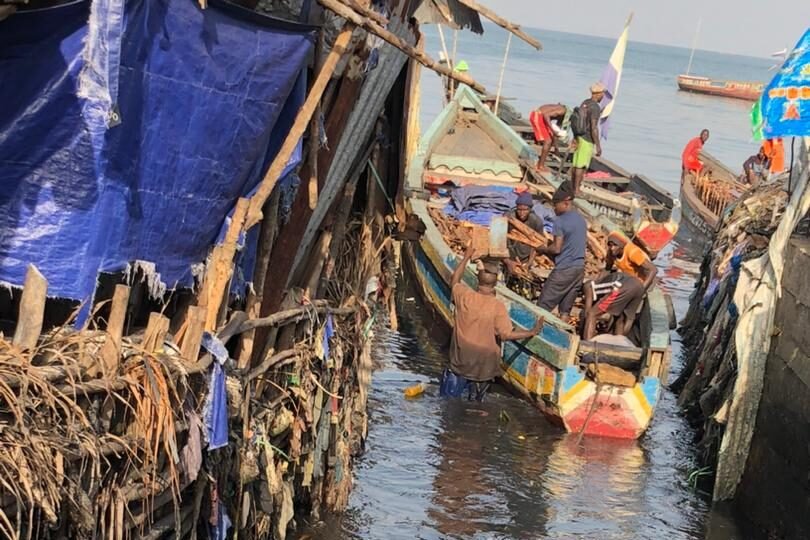
Bahari Bessie Sarowiwa She’s big, she’s blue, she’s bold. She’s Bahari. For many years Bahari gave life to many and offered refuge to many more in Tudor Moroto, like a mother. She’s watched us grow up and was always there when we needed her. We played with her when we were kids and learned to swim in her cool waters. She gave us a place to relax when the heat was unbearable. She provided food for us when our parents came back with nothing. She liked having us around and never complained. But not anymore. She has changed. She doesn’t seem happy these days and the glow that she once had is no longer there. The beautiful blue she once had is now more of a blue green. And the cool breeze she would give us when heat was unbearable is now just hot air and a stench. The food she shared with us has dwindled and it appears that all the fishermen catch now are plastic bags and used diapers. The places we would go to play with her are now places we warn visitors about because they never know what they may step on. All the people that relied on her for their basic needs are now struggling to even get through the day. It breaks my heart. How did we end up here? Bahari, did we do this to you? That’s what everyone is saying. That our actions are what made you this angry. We cut down the trees that fed you and kept you clean to build houses. You were nice to us but instead we paid you back with food and sewer waste. You’re now threatening to leave us.   Please don’t give up on us, Bahari. We’re trying to do better. We’re learning from our mistakes. It might be a little late but it’s the least we can do. 

Musings

Battered and bent, but still standing

Battered and bent, but still standing Desta Ali Down the long, steep, steps of Susan’s Bay stands a tall, green five-storey building. It looks weathered and worn, but it stands stubbornly and quietly. During the day it is virtually empty, but I’m sure it houses more than hundred people at night. There is a lot of cracks in its concrete; its roof is made of rusted metal sheets. The building tells a story of time. Every time I look at it, I hear it say, “I have survived many floods, yet I am still standing. I am a survivor.” It almost makes me fall in love with it, because it reminds me of myself, standing tall in the midst of trials, keeping my head high, and trying very hard not to crumble. The glasses on the windows are broken, yet the bars are still holding on, almost as if fighting hard to maintain security. The top floor of the building is unpainted. That means it has been added recently to create more space for more people. The bottom floor is incomplete and wrapped with tarps and more rusted metal sheets. It was possibly built as a garage but is now being used as an accommodation for a desperate family. This tells a story of greed, because someone has decided that making money from rent is more important than the safety of people. I admire the building for all it has gone through and all that happens within its walls. But I also feel sorrow and dread. I know it’s only a matter of time before it crumbles. The land it is built on is a coastal land and not meant for buildings. I am sure its foundations were not made to carry that much weight. I always ponder how many more floods can it survive? How much more erosion can its foundations take? My only hope is that when that day arrives, it will happen during the day, when no one is home.

Blog

शिमला की बस्तियों में सर्वेक्षण करने का अनुभव

शिमला की बस्तियों में सर्वेक्षण करने का अनुभव साहिल कुमार 2021 में, मैंने अपनी ग्यारहवीं और बारहवीं लाल पानी स्कूल, कृष्णा नगर से की थी। मुझे मेरे घरवालों ने बताया था कि किसी के साथ काम से हटके बात नहीं करनी है, और किसी से लड़ाई झगड़ा नहीं करना है। घर के बड़े मानते हैं कि वहां लोग जल्दी लड़ाई झगड़े में उतर आते हैं, पर मेरे साथ स्कूल के दौरान कभी ऐसी कोई घटना नहीं हुई। सितंबर महीने में जब मैंने Urban SHADE प्रोजेक्ट में काम करना शुरू किया, तभी यही धारणा मेरे मन में थी। मेरी टीम का काम था कि घर-घर जाकर सर्वेक्षण करना। हम पूरे सात लोग ये काम पर लगे थे। इस प्रोजेक्ट में काम शुरू करने के बाद, कृष्णा नगर के लोगों और जगह के बारे में मेरी धारणा और अनुभव में आया बदलाव।  हमने Urban SHADE प्रोजेक्ट हिमाचल प्रदेश के शिमला की अनौपचारिक बस्तियों में घरेलू स्तर पर सर्वेक्षण से संबंधित आँकड़े एकत्र करना शुरू किया। हम दो बस्तियों – कृष्णा नगर और ईदगाह कॉलोनी – में काम कर रहे थे। घरेलू सर्वेक्षण का उद्‌देश्य अनौपचारिक बस्तियों में रहने वाले लोगों के स्वास्थय पर पड़ने वाले प्रभावोंऔर कमज़ोरियों को समझना है। साथ ही चरम मौसम की घटनाओं के दौरान और उसके बाद सार्वजनिक स्वास्थय सुविधाओंमें उपलब्धता को भी समझना  है।  यह मेरा पहला काम था। मेरा, शुरुआती अनुभव बिल्कुल ना के बराबर था लेकिन पहले ही दिन से नई चीजों को सिखने पर ध्यान दिया। जब पहले दिन हम अपने क्षेत्रों में पूरी टीम  के साथ गए तो हमने देखा कि कृष्णा नगर में रास्ते सीधे नही है और बहुत सी सीढ़ियाँ है। यहाँ पर लोगों के घर बहुत पास-पास है, और भारी बारिश के दौरान लोगों के घरो के जल निकासी की स्थिती बहुत खराब है। कृष्णा नगर के लोगों का कहना यही था कि बहुत से लोग आते-जाते है और सर्वे कर के चले जाते है। परंतु कोई हमारे लिए कुछ भी नहीं करता।  मैपिंग की समस्याएं हमें ट्रेनिंग के दौरान मैपिंग के बारे में बताया गया। सर्वे के पहले मैपिंग जरूरी थी ताकि कृष्णा नगर की भौगोलिक स्थिति के बारे में और घरों की स्थिति के बारे में अच्छे से पता चले।  दोनों क्षेत्र- कृष्णानगर और ईदगाह पहाड़ी क्षेत्र हैं,और रास्तों में उतार चढ़ाव बहुत है।  मेरे सीनियर्स और टीम मेंबर्स को भी कृष्णा नगर में मैपिंग के दौरान ऊपर नीचे चढ़के थकान का सामना करना पड़ा। हम सोच में पड़ गए कि यहाँ के लोग, विशेष रूप से बुज़ुर्ग लोग, कैसे रोज चलते फिरते होंगे। सर्वे के दौरान हमें बुज़ुर्ग बताते थे कि उन्हें नीचे से कार्ट रोड पहुँचने में बहुत समय  लगता है। बहुत से बुज़ुर्ग डंडा पकड़कर, बीच में बैठ-बैठ कर धीरे-धीरे ऊपर तक पहुँचते हैं। मैपिंग में मुझे कई जरूरी चीजों का ध्यान रखना पड़ता था। कोई घर छूट ना जाए। लोगो से रास्ते को पूछना या कौनसा घर किस से जुड़ा है। कृष्णानगर में पालतू और आवारा कुत्तों का डर बहुत ज्यादा था। हमें डर था कि ये आवारा कुत्ते हमें ही काट न दें। हम लोगों को पूछ कर ही गालियों में जाते थे। जिन घरों में पालतू कुत्ते होते थे वह उन्हें पकड़कर या बांधकर रखते थे। हमने सुरक्षित होकर मैपिंग का काम चालू रखा । मैपिंग में हमें एक ही गली में कई बार आना जाना पड़ता था। शुरुआत में थोड़ी थकान के साथ समय वाला काम लगता था। फिर मुझे इसकी आदत होने लगी। मैंने मैप के  चित्र का  ज्यादातर काम खुद ही किया है। मैप को पहले मोटे तौर पर बनाया और फिर उसे बड़े चार्ट में लैंडमार्क लिखकर तैयार किया।यह काम मुश्किल था क्योंकि  गलीयाँ कहीं न कहीं एक दूसरे से मिलती हैं। इस दौरान, मैं और मेरी टीम घंटों वाल्मीकि मंदिर में बैठकर काम करते थे। वहाँ का माहौल अच्छा था और लोगों को हमारे काम के बारे में जानने में दिलचस्पी थी। मुख्य घरेलू सर्वे की शुरुआत पायलटिंग के दौरान मेरी एक परिवार से बात हुई।  इन लोगों ने 2023 में स्लॉटर हाऊस के हादसे को अपनी आंखों से देखा। उन्होने अपने घर के साथ लगती नालियों और बुरी जल निकासी  (drainage) के बारे में बताया। उन्होंने बारिश के दौरान अपने घर को छोड़ने की स्थिती और अनुभव को मेरे साथ साझा किया।  एक और दुखी परिवार के अनुभव को भी मैने सुना था। उन्होनें कुछ साल पहले नया घर खरीदा था जो कि 2023 के स्लॉटर हाउस क लैंडस्लाइड (landslide)  हादसे में तबाह हो गया।आज उस परिवार को किराए के घर में अपना जीवन यापन करना पड़ रहा है। सर्वे के पहले दिनों में मेरा अनुभव ठीक रहा और लोगो से बात करके अच्छा लग रहा था। सर्वे के तीसरे दिन, जब मैं एक आदमी से सर्वे के सवाल पूछ रहा था, उन्होंने घर के संबंधित सवालों के बारे में बुरा मान लिया। उनका व्यवहार मेरे प्रति बहुत अच्छा था परंतु उनको सर्व के कुछ प्रश्नों से थोड़ी परेशानी थी। उन्होंने  सर्वे रोकने को कहा और उन्होंने मुझे डेटा टैबलेट से मिटाने को भी कहा। कुछ देर के लिए उन्होंने टैबलेट मेरे हाथ से लेकर उसमें कुछ देखने भी लगे। इसके बाद में हमारे टीम के सीनियर ने कृष्णा नगर के वाल्मीकी मंदिर वहाँ के निवासियों के साथ बैठक की । उन्होंने सर्वे के बारे में अच्छे से समझाया। इस बैठक से लोगों को समाधान मिला और सर्वे सामान्य तरीके से चल पड़ा। और उसके बाद वाल्मिकी सभा के लोगों ने हमें सर्वे के लिए और ज्याया प्रोत्साहित किया।  लोगों को दिक्कत व परेशानियाँ लोगो का मेरे प्रति व्यवहार अच्च्छा रहा। लोग जानकारी देने के लिए पूरा समय देते थे और अपने पूर्व प्रभावो को हमारे साथ साझा करते थे। लोग अपनी गंभीर बीमारियों के बारे में भी हमारे साथ जानकारी साझा करते थे। लोगों ने  बताया कि कार्ट रोड तक आने-जाने  से जोड़ों में दर्द होता है।यहाँ का नाला कूड़े से भरा रहता है, और जो लोग नाले के पास रहते हैं वे इससे ज्यादा परेशान रहते हैं। इससे वर्षा के मौसम में समस्या आती है और बीमारियाँ पैदा होती हैं। कृष्णानगर में ऐबुलेंस की सेवा भी ना के बराबर है। मौसम के कारण

Scroll to Top