shimla

Events

Consulting with the communities

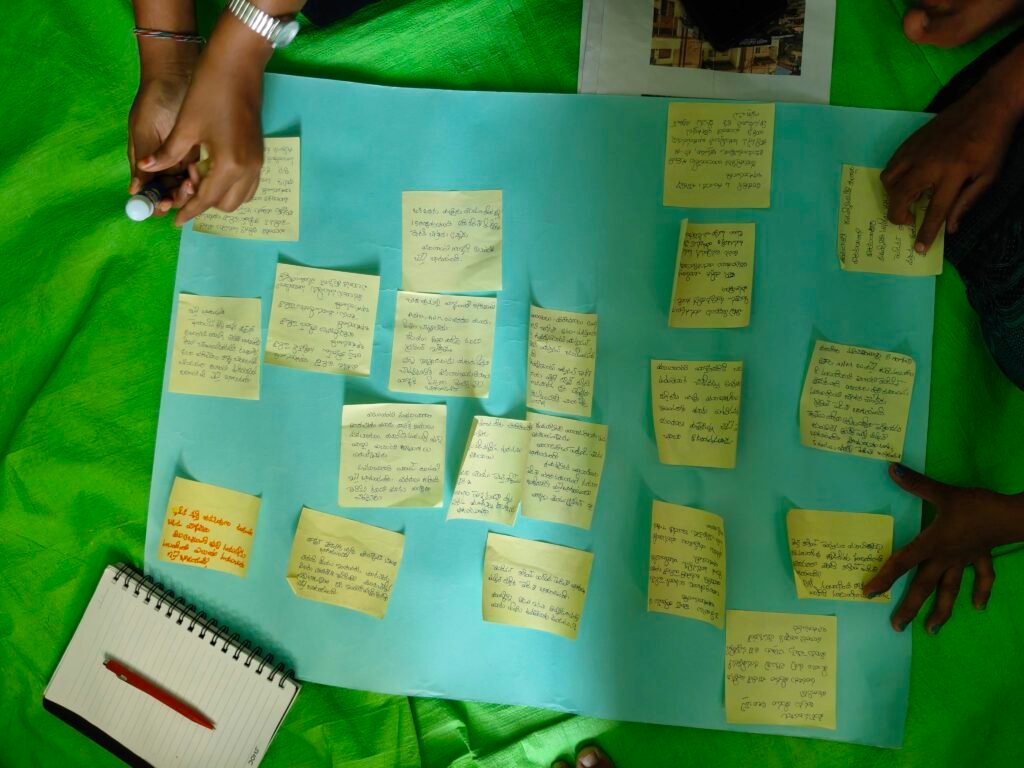
Consulting with the communities “What did you have for tiffin (breakfast)?” This question brings a smile to the faces of the people sitting in for community meetings of the Urban SHADE project. In these meetings that started in February 2026 are conducted in the community, the Vijayawada-Guntur team and the Shimla team discuss the findings and the proposed intervention of the Urban SHADE project.  The meetings have been set up in people’s houses within the community which they have generously opened for the Urban SHADE team, despite houses being small and cramped. In Guntur and Vijayawada, the hosts removed the cot from the house to make space for the duration of the meeting. In Shimla too, a friendly person’s house, public spaces such as grounds, or Anganwadi centres or even the lobby of a residential building were used for these meetings.  We are grateful to everyone who helped us organise these meetings. The meetings were conducted with different groups from different sites of the settlement- women, old persons, persons with disabilities, outdoor workers and those with chronic illnesses. In Shimla, meetings were also determined by the location- such as upper part of settlement, and the lower parts, and some occupational groups such as municipal sanitation workers. In Vijayawada and Guntur, the team hung relevant photos and distributed some photos among the participants that helped spark discussion among them. There were photos of cracked walls of houses, hospitals, garbage on the road, newspaper headlines of floods, flood warning messages or illustrations depicting heart illness among others. This technique helped a great deal in communicating the findings of the qualitative research including focus group discussions and in-depth interviews, especially since many of the participants were illiterate or semi-literate. Persons who participated in these meetings discussed the garbage in their areas, what happened during the floods, or their experiences in public hospitals or private clinics. Many people who attended the meetings said that they saw the messages sent by the government on flood warnings for the first time. They spoke about how they barely got food or water during the heavy floods in 2024. The community members also suggested their ideas for possible interventions.  In Shimla, the team presented an illustrated flow chart with the findings, gaps and the planned intervention activities. The team explained that the qualitative study presented cardiovascular diseases, musculoskeletal problems, skin disease, alcohol and drug addiction as problems facing the community. There are also increased out-of-pocket expenditures due to lack of ambulances and unavailability of medicines in government hospitals. The distance of the hospitals deters people from going there, especially older persons who are unable to walk up to main road, often leading to them missing out on follow-ups. Both informal settlements in Shimla do not have functional Primary health centres. Pregnant women and children have to go to hospitals further away to get basic check-up or immunisation. People reflected on how they are unable to sleep when during heavy rains. While they do get flood messages, they have no idea what action should be taken. The team also presented a general lack of awareness about the diseases caused due to extreme rainfall, and suggested interventions. These meetings helped validate the findings and also get buy-in from the community for the intervention activities still being planned. In Andhra Pradesh the team includes researchers Pavani Pendyala and Hemanth Chandu, field coordinator Satyanarayanamma Methukulla and community co-researchers Dasari Madhavi and Maddela Siva Parvathi. In Shimla, the team includes researchers Inayat Singh Kakar, Dr Yetika Dolker, and field coordinator, Sahil Kumar. 

Musings, Uncategorized

No future

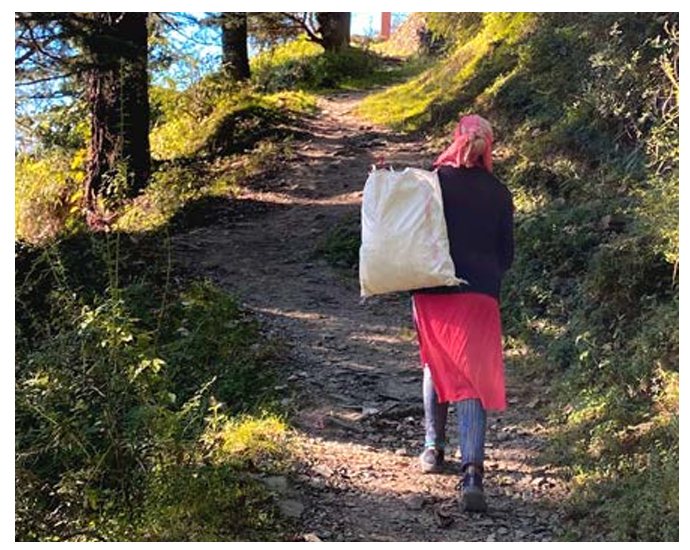
Menaka Rao Ashu waited for me outside the hotel. He is a skinny man, and was visibly uncomfortable standing in the lobby of the hotel. He insisted on meeting me in the hotel, and not in Krishna Nagar, where he lives. He says his father was a municipal waste worker. But he drank so much that the children could not go to school. Ashu dropped out of school in his 7th standard. He became a contractual waste picker after his father’s death.  “There is no future in this work, Madam,” he told me, shaking his head. He feels the futility of his job, while not being able to see a way out. “I just don’t want to go to work, especially during the monsoon. The waste which I carry on my back just gets right into my clothes and trickles down my body. There is dal, curry, all kinds of food,..,” he said, trailing off and making a face full of disgust. His school-going son asked him one day why he did waste work. “I felt very bad that day,”he said. During one monsoon, about ten years ago, his family had to leave the house, built by his grandfather, because it got dangerous. The floor of his house cracked further and further, threatening to collapse. “We kept thinking the floor would stop caving, but it kept getting worse,” he said. They now live in a rented premise, cutting into their meagre income. So when he fractured his leg this year because of an accident at work, he had to borrow nearly Rs 20,000. He was out of work for three months.  “There is no future in this work, madam,” is his only refrain.

Blog

Lessons from margins: Insights from visit to Shimla’s Krishna Nagar

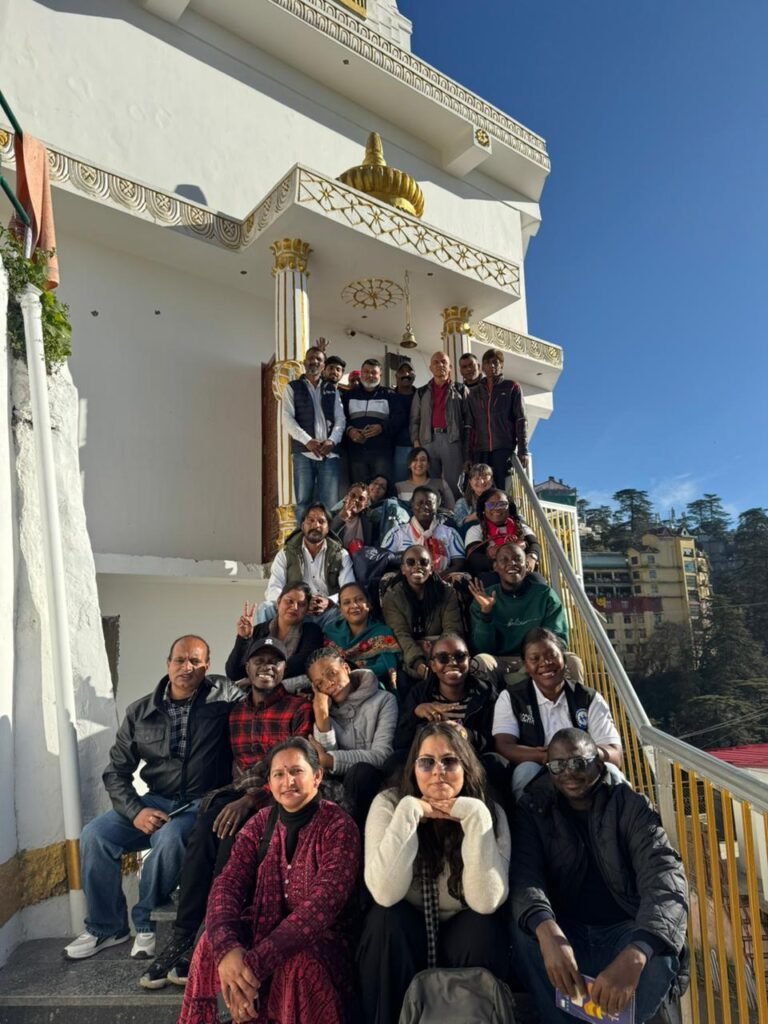
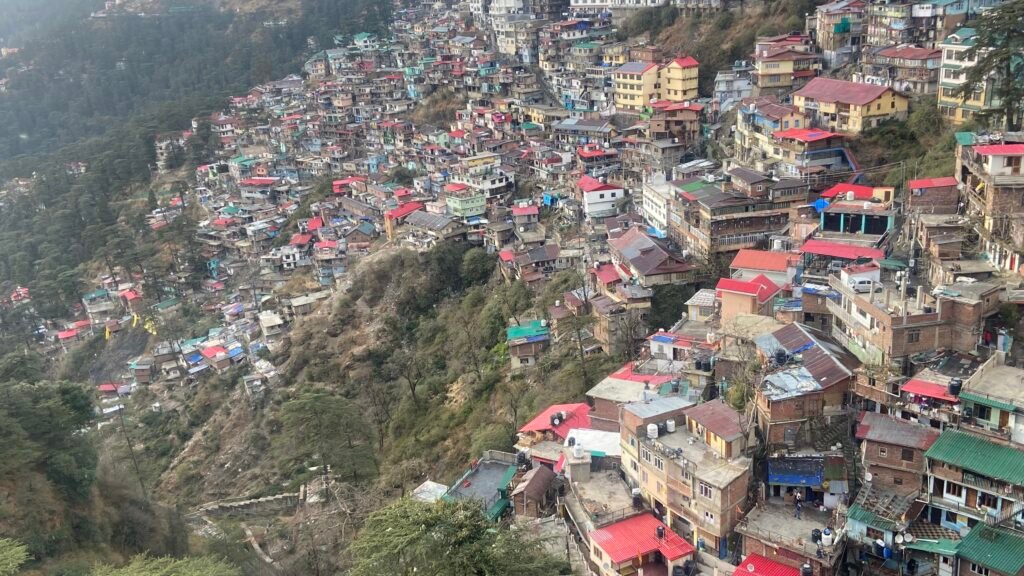
Lessons from margins Insights from Urban SHADE team visit to Shimla’s Krishna Nagar Looking at the paved roads and cemented houses at the beginning of Krishna Nagar settlement in Shimla, the first reaction of Urban SHADE members from Sierra Leone and Kenya was- “This place does not look like an informal settlement.” Krishna Nagar is an informal settlement at the heart of Shimla city. The Urban SHADE consortium visited Krishna Nagar during the Annual General Body Meeting on November 30. The consortium members were first trying to size up the differences and similarities between their field sites and Krishna Nagar. The settlement was built during the colonial times to house waste workers and other labourers. People in Krishna Nagar do not have land tenure.  “The structures in Krishna Nagar looked stronger. The houses in our settlements are not as strong. In fact, even with a bit of heavy wind, the houses can be destroyed,” said Tena Kabba from Institute of Gender and Children’s Health Research (IGCHR) in Sierra Leone, which works with three informal settlements in Freetown for the project. The consortium members from Sierra Leone felt that Krishna Nagar with its steep slopes and steps resembled Moyiba a little.  But as the members walked down towards the lower part of the settlement which is right at the edge of the hill, the challenges became apparent. Though the houses look well taken care of, some of them even have a small garden in front of them, many of them have big cracks.  “My first thought was, is this really an informal settlement?,” said Michelle Koyaro from Slum Dwellers International, Kenya. “We then saw the housing conditions. The walls of many houses are full of cracks. It places them in a vulnerable state. They are not sure if they will be able to live in the house next monsoon. I realised that if someone does not know the context definition of informal settlement, they will quickly cancel Krishna Nagar as informal settlement. ” And indeed, many houses have collapsed at the edge of the hill during the 2023 landslide when the Slaughterhouse collapsed. The consortium members met a man who sent his family to his native place but continued to live in a house perched at the edge of the hill. He said he had no option because he had to make a living in Shimla.  What struck many Urban SHADE members is how much people invested in the houses. The houses are by and large cemented, and many have taken effort to even have a garden in a small strip of land. The roads in the upper part of the settlement were built by the municipal authorities. The consortium members then saw older persons trying to walk up the stairs, as well as houses with big cracks perched precariously at the extreme lower part of the settlement, at huge risk of being washed out by rains. Dr Jiban Karki, from Liverpool School of Tropical Medicine (LSTM) said that the lower parts of the settlement were revealing. “I visited Krishna Nagar twice. But this time we went further down, where we saw all the cracked houses. We found that people were still living there despite the danger. There was another vulnerable population who were living in rented houses. Towards the top of the hill in Krishna Nagar people were relatively better off, then those in the lower range.” Dr Karki spoke about meeting some Nepali origin people in the lower parts of the settlement who lived on rent, in houses that were more precarious. As the consortium members tried to climb up the stairs they realised how difficult it is. ”I kept thinking about how many elderly people live there. As young as I am, I was barely able to climb the stairs. Even if there is a car available, it is hard to get to the main road,” said Dr Desta Ali, from IGCHR. Many wondered how pregnant persons and those with disabilities climb stairs everyday.  Some of the Urban SHADE team members met an elderly lady who had great difficulty climbing a steep flight of stairs. She took breaks sitting down at the side of the stairs while walking up with a stick.She sought help from some teenagers passing by.  The consortium also saw the building of the primary health centre (PHC) which is currently non-functional. The older PHC which was there earlier collapsed more than a decade ago during the monsoon. The team from Sierra Leone and Kenya observed that they had a functional health facility within most of their settlements they are working with for the Urban SHADE project. The ASHA workers present in the meeting also raised various problems people in the community faced because of PHC.  Dr Ijeoma Onyeahialam, who works with LSTM observed, “In relation to Sustainable Development Goals (SDG), the community falls short because of the community’s lack of access to health care. The PHC is not working. After going into the community more, you can see how pregnant women are disadvantaged. This also helps various country teams to see how they can compare and see similarities.”  The consortium members also had a meeting with community leaders and ASHA workers at Valmiki temple said to have been established in the early 1900s. Valmiki is a patron saint for Dalits. The discussions ranged from lack of land tenure, caste discrimination and access to healthcare.  The community leaders of Krishna Nagar spoke about how the government keeps trying to evict them, as it falls on prime land. “Just before the elections, the political leaders promise that they will ensure we will be granted land tenure. But after elections, these promises vanish,” said Kuldeep, who is with the Valmiki Sabha  The teams from Sierra Leone and Kenya said that it’s just the same situation in their hometowns with informal settlements. Except, the people working in the settlements there refrain from investing their money in building a better house because of the fear of eviction.  “People

Blog

शिमला की बस्तियों में सर्वेक्षण करने का अनुभव

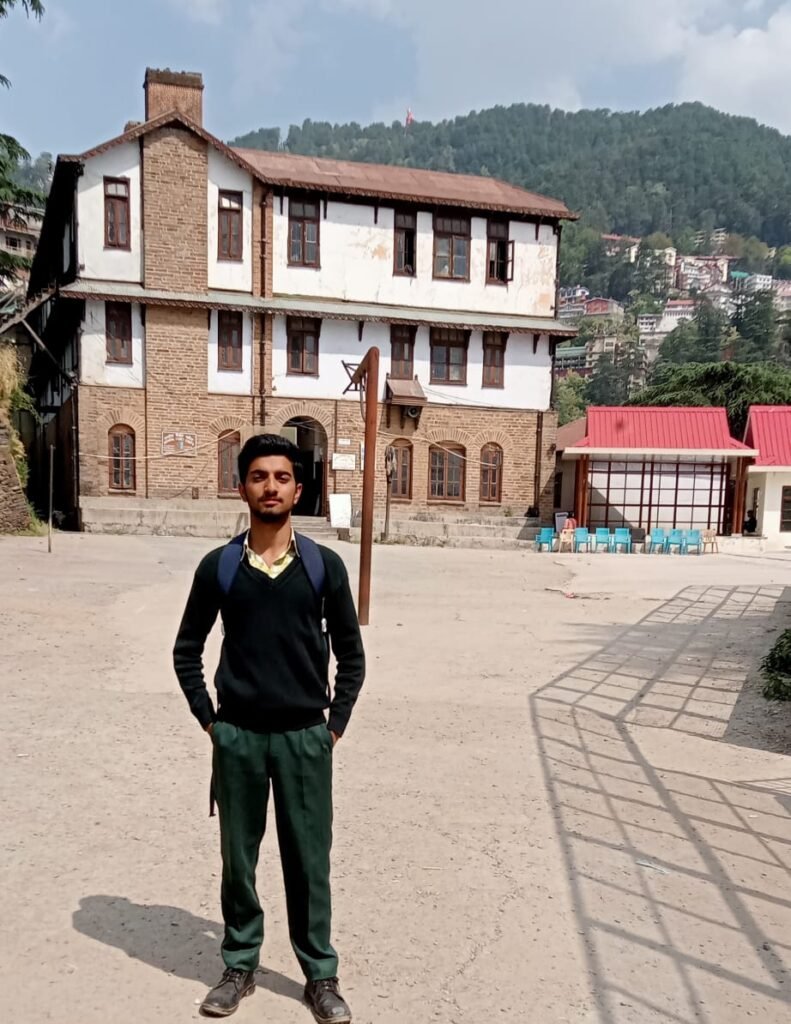
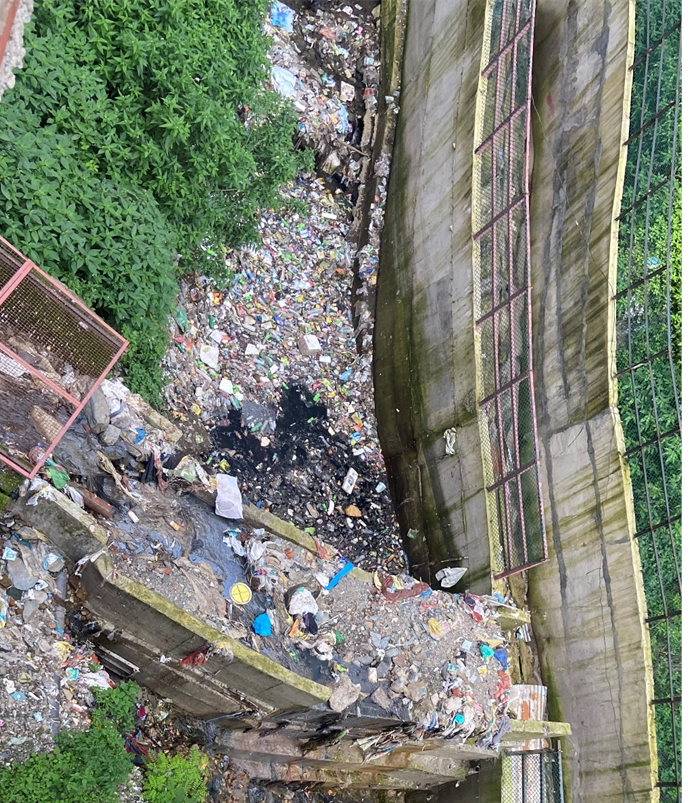
शिमला की बस्तियों में सर्वेक्षण करने का अनुभव साहिल कुमार 2021 में, मैंने अपनी ग्यारहवीं और बारहवीं लाल पानी स्कूल, कृष्णा नगर से की थी। मुझे मेरे घरवालों ने बताया था कि किसी के साथ काम से हटके बात नहीं करनी है, और किसी से लड़ाई झगड़ा नहीं करना है। घर के बड़े मानते हैं कि वहां लोग जल्दी लड़ाई झगड़े में उतर आते हैं, पर मेरे साथ स्कूल के दौरान कभी ऐसी कोई घटना नहीं हुई। सितंबर महीने में जब मैंने Urban SHADE प्रोजेक्ट में काम करना शुरू किया, तभी यही धारणा मेरे मन में थी। मेरी टीम का काम था कि घर-घर जाकर सर्वेक्षण करना। हम पूरे सात लोग ये काम पर लगे थे। इस प्रोजेक्ट में काम शुरू करने के बाद, कृष्णा नगर के लोगों और जगह के बारे में मेरी धारणा और अनुभव में आया बदलाव।  हमने Urban SHADE प्रोजेक्ट हिमाचल प्रदेश के शिमला की अनौपचारिक बस्तियों में घरेलू स्तर पर सर्वेक्षण से संबंधित आँकड़े एकत्र करना शुरू किया। हम दो बस्तियों – कृष्णा नगर और ईदगाह कॉलोनी – में काम कर रहे थे। घरेलू सर्वेक्षण का उद्‌देश्य अनौपचारिक बस्तियों में रहने वाले लोगों के स्वास्थय पर पड़ने वाले प्रभावोंऔर कमज़ोरियों को समझना है। साथ ही चरम मौसम की घटनाओं के दौरान और उसके बाद सार्वजनिक स्वास्थय सुविधाओंमें उपलब्धता को भी समझना  है।  यह मेरा पहला काम था। मेरा, शुरुआती अनुभव बिल्कुल ना के बराबर था लेकिन पहले ही दिन से नई चीजों को सिखने पर ध्यान दिया। जब पहले दिन हम अपने क्षेत्रों में पूरी टीम  के साथ गए तो हमने देखा कि कृष्णा नगर में रास्ते सीधे नही है और बहुत सी सीढ़ियाँ है। यहाँ पर लोगों के घर बहुत पास-पास है, और भारी बारिश के दौरान लोगों के घरो के जल निकासी की स्थिती बहुत खराब है। कृष्णा नगर के लोगों का कहना यही था कि बहुत से लोग आते-जाते है और सर्वे कर के चले जाते है। परंतु कोई हमारे लिए कुछ भी नहीं करता।  मैपिंग की समस्याएं हमें ट्रेनिंग के दौरान मैपिंग के बारे में बताया गया। सर्वे के पहले मैपिंग जरूरी थी ताकि कृष्णा नगर की भौगोलिक स्थिति के बारे में और घरों की स्थिति के बारे में अच्छे से पता चले।  दोनों क्षेत्र- कृष्णानगर और ईदगाह पहाड़ी क्षेत्र हैं,और रास्तों में उतार चढ़ाव बहुत है।  मेरे सीनियर्स और टीम मेंबर्स को भी कृष्णा नगर में मैपिंग के दौरान ऊपर नीचे चढ़के थकान का सामना करना पड़ा। हम सोच में पड़ गए कि यहाँ के लोग, विशेष रूप से बुज़ुर्ग लोग, कैसे रोज चलते फिरते होंगे। सर्वे के दौरान हमें बुज़ुर्ग बताते थे कि उन्हें नीचे से कार्ट रोड पहुँचने में बहुत समय  लगता है। बहुत से बुज़ुर्ग डंडा पकड़कर, बीच में बैठ-बैठ कर धीरे-धीरे ऊपर तक पहुँचते हैं। मैपिंग में मुझे कई जरूरी चीजों का ध्यान रखना पड़ता था। कोई घर छूट ना जाए। लोगो से रास्ते को पूछना या कौनसा घर किस से जुड़ा है। कृष्णानगर में पालतू और आवारा कुत्तों का डर बहुत ज्यादा था। हमें डर था कि ये आवारा कुत्ते हमें ही काट न दें। हम लोगों को पूछ कर ही गालियों में जाते थे। जिन घरों में पालतू कुत्ते होते थे वह उन्हें पकड़कर या बांधकर रखते थे। हमने सुरक्षित होकर मैपिंग का काम चालू रखा । मैपिंग में हमें एक ही गली में कई बार आना जाना पड़ता था। शुरुआत में थोड़ी थकान के साथ समय वाला काम लगता था। फिर मुझे इसकी आदत होने लगी। मैंने मैप के  चित्र का  ज्यादातर काम खुद ही किया है। मैप को पहले मोटे तौर पर बनाया और फिर उसे बड़े चार्ट में लैंडमार्क लिखकर तैयार किया।यह काम मुश्किल था क्योंकि  गलीयाँ कहीं न कहीं एक दूसरे से मिलती हैं। इस दौरान, मैं और मेरी टीम घंटों वाल्मीकि मंदिर में बैठकर काम करते थे। वहाँ का माहौल अच्छा था और लोगों को हमारे काम के बारे में जानने में दिलचस्पी थी। मुख्य घरेलू सर्वे की शुरुआत पायलटिंग के दौरान मेरी एक परिवार से बात हुई।  इन लोगों ने 2023 में स्लॉटर हाऊस के हादसे को अपनी आंखों से देखा। उन्होने अपने घर के साथ लगती नालियों और बुरी जल निकासी  (drainage) के बारे में बताया। उन्होंने बारिश के दौरान अपने घर को छोड़ने की स्थिती और अनुभव को मेरे साथ साझा किया।  एक और दुखी परिवार के अनुभव को भी मैने सुना था। उन्होनें कुछ साल पहले नया घर खरीदा था जो कि 2023 के स्लॉटर हाउस क लैंडस्लाइड (landslide)  हादसे में तबाह हो गया।आज उस परिवार को किराए के घर में अपना जीवन यापन करना पड़ रहा है। सर्वे के पहले दिनों में मेरा अनुभव ठीक रहा और लोगो से बात करके अच्छा लग रहा था। सर्वे के तीसरे दिन, जब मैं एक आदमी से सर्वे के सवाल पूछ रहा था, उन्होंने घर के संबंधित सवालों के बारे में बुरा मान लिया। उनका व्यवहार मेरे प्रति बहुत अच्छा था परंतु उनको सर्व के कुछ प्रश्नों से थोड़ी परेशानी थी। उन्होंने  सर्वे रोकने को कहा और उन्होंने मुझे डेटा टैबलेट से मिटाने को भी कहा। कुछ देर के लिए उन्होंने टैबलेट मेरे हाथ से लेकर उसमें कुछ देखने भी लगे। इसके बाद में हमारे टीम के सीनियर ने कृष्णा नगर के वाल्मीकी मंदिर वहाँ के निवासियों के साथ बैठक की । उन्होंने सर्वे के बारे में अच्छे से समझाया। इस बैठक से लोगों को समाधान मिला और सर्वे सामान्य तरीके से चल पड़ा। और उसके बाद वाल्मिकी सभा के लोगों ने हमें सर्वे के लिए और ज्याया प्रोत्साहित किया।  लोगों को दिक्कत व परेशानियाँ लोगो का मेरे प्रति व्यवहार अच्च्छा रहा। लोग जानकारी देने के लिए पूरा समय देते थे और अपने पूर्व प्रभावो को हमारे साथ साझा करते थे। लोग अपनी गंभीर बीमारियों के बारे में भी हमारे साथ जानकारी साझा करते थे। लोगों ने  बताया कि कार्ट रोड तक आने-जाने  से जोड़ों में दर्द होता है।यहाँ का नाला कूड़े से भरा रहता है, और जो लोग नाले के पास रहते हैं वे इससे ज्यादा परेशान रहते हैं। इससे वर्षा के मौसम में समस्या आती है और बीमारियाँ पैदा होती हैं। कृष्णानगर में ऐबुलेंस की सेवा भी ना के बराबर है। मौसम के कारण

Events, India

Enumerators workshop India

September 2025 Household Survey Enumerators workshop, India  The Urban SHADE project in India conducted a training of enumerators for conducting the Household Survey: Social and Health Vulnerability Assessment in September. The workshops were held first in Vijayawada and then Shimla in five-day spans between September 8, 2025, to September 22, 2025.  In both the workshops, the research team conducted a focus group discussion with the enumerators to get a pulse on their understanding and knowledge about the different informal settlements we are studying, impact of extreme weather events in such settlements among others. Many of the enumerators who had prior experience conducting surveys participated wholeheartedly on their understanding of extreme weather events, and the various challenges in conducting surveys in the field.  The research team including Hemanth Chandu, Malini Aisola, Inayat Kakar and Yetika Dolker explained to the enumerators about the Urban SHADE project and broadened their understanding of extreme weather events and how it affects people with different vulnerabilities especially the poor who live in informal settlements, disabled, or those with precarious jobs, or with chronic illnesses differently. Each section of the survey, and their questions were explained to the enumerators. The sessions covered Ethics related to data collection in great detail. It was emphasised that the data collection must be implemented consistent with the principles of the Human Rights Based-Approach to Data. The research team spoke about maintaining confidentiality and privacy of the people who will be asked questions from the questionnaire. The enumerators were made aware of the gender and cultural norms that could come to play while conducting the survey. The research team also highlighted that data collection should not lead to further discrimination among the already marginalised communities that the Urban SHADE project works with.  The interviewers were given detailed instructions on preparing for the survey, introducing themselves, obtaining consent, and taking a survey. The participants were given mock practice sessions where one of them played the respondent and other played the enumerator.  The situations included dealing with a busy mother who had no time, or a person concerned about the survey leaking information to the government. The situations which were designed to be tough helped the enumerators practice their skills in seeking consent and trying to convince people for a survey by being transparent and respectful. The role-playing activity broke the monotony of the typical workshop with presentations.  Balaji Rao Nemala gave hands-on training on how to map settlements where the survey is to be conducted. Nemala (photo below) who is the Project Manager with The George Institute, has handled trials all over India in both urban and rural settlements. Mapping literally means drawing a map of the settlement on paper. Nemala guided the enumerators in the field on how to map the structures in a way that they do not miss a single house. This exercise gets complicated in informal settlements, which barely have any straight paths. In Shimla this was compounded by the fact that the settlements are on hilltops which required a lot of physical labour of climbing up and down the hilltops. The enumerators covered the length and breadth of the settlements marking structures in each of the narrow lanes of the settlements. The people in the settlements who were curious about the exercise asked them about it, giving the enumerators a chance to explain the survey to them.  Bijini Bahuleyan, Data Manager withThe George Institute made the data base for the survey which is to be conducted in Telegu and Hindi. She also helped participants log on RedCap software which will be used for data collection in the survey, and trained them on how to use the software for data collection.  The survey is expected to begin in October. In Vijayawada and Guntur informal settlements (Vambay Colony, RR Peta and Sarada Colony), the survey will be conducted in Telegu. In the Shimla informal settlements (Krishna Nagar and Eidgah colony), the survey will be conducted in Hindi.

Blog, India

When an informal settlement has no PHC

When an informal settlement has no PHC Yetika Dolker As a public health professional, I have worked in the remote and rural areas of Lahaul-Spiti and Kinnaur in Himachal Pradesh to Udaipur in Rajasthan and in the plains of Bihar.  I now with the Urban SHADE project with urban marginalised settlements in Shimla. Urban and rural health care systems are worlds apart. In rural and remote areas, reaching the facility is difficult because of extreme climate or rugged terrain. Often there is a lack of trained health personnel, or diagnostics or treatment provision in these areas. In urban areas, the public health challenges are different as I have discovered while working with informal settlements in Shimla, the capital of Himachal Pradesh. While urban areas have better access to advanced healthcare facilities, trained healthcare personnel and technology, the most basic level of health care is often lacking. Especially for people who need it most- the urban poor who live in informal settlements. People here are also more vulnerable to diseases as they lack access to safe drinking water, sanitation, good nutrition. Climate change and its effects also affect these vulnerable persons more. Hidden health risks In Shimla extreme rains, landslides, flooding, treefalls and rock falls are common during the monsoon. The Urban SHADE project works in Krishna Nagar settlement and Idgah colony in Ruldu Bhatta. Both are informal settlements, perched atop the edges of hills making them even vulnerable to landslides and floods. A major landslide in Krishna Nagar in 2023, felled an entire slaughterhouse in the colony, and killed at least two persons. The houses here are often overcrowded, with poor ventilation, sometimes stinking due to garbage. There is barely any sanitation here. “Dog’s potty is everywhere. Walking around it is like playing stapu (hopscotch). In the rains, the muck gets inside the shoes. What to say. We live in such filth,” said a woman who lived in Krishna Nagar in a focus group discussion (FGD). “It appears that all the filth from the city comes and collects here. The gutters are open and flowing. Walking in the pathways makes you feel dirty,” woman from Krishna Nagar said. Public washrooms remain dirty, and women in these colonies say they suffer from pelvic infections as a result. The water supply is often contaminated, and people say they get gastrointestinal diseases as a result. “When there is a water cut, often the water supply is contaminated. We have heard of jaundice cases in many houses in those periods,” said a woman from Idgah colony. Residents here complain of deliberate neglect by municipal authorities. “Why do you think other areas in the city are not so dirty, madam,” asked a woman from Krishna Nagar. “The other areas in the city are so clean, and neat. It appears that all the filth from the city comes and collects here. The gutters are open and flowing . Walking in the pathways makes you feel dirty.” No PHC in the settlements To top all these existing health problems, there is no subcentre or primary health care centre (PHC) within both these settlements. A PHC or dispensary is the first point of contact in any health system. A strong and comprehensive primary health care facility can improve the healthcare access for the people and reduce the load in tertiary hospitals, not just by treating ailments, but also with preventive and promotive health care. Even though Shimla’s medical college and zonal hospital are within 5-6 kms from these two settlements, the residents are compelled to go to these hospitals even for small health issues or ailments that can be tackled at primary health care level such as diabetes. There are many persons in these colonies who suffer from chronic ailments such as hypertension, and diabetes or from respiratory illnesses such as tuberculosis, skin diseases and pain in bones and joints. They do not have motorable roads near their houses and must climb up several levels to reach the main road and catch a vehicle. The residents of Krishna Nagar and Idgah colony are garbage collectors, daily wage labourers, and small vendors, many of whom are migrants from other states or within the state. Families lose one- or two-persons’ daily wages (if the patient needs an attendant), having to spend money on travel, and medicines. These factors make the visit to hospital daunting, often leading to late diagnosis or loss to follow-ups. “Our elderly here have cases of blood pressure. Their blood pressure increases while they climb up the hill to reach hospital. We really need a dispensary here,” said a woman from Idgah colony. Take the case of tuberculosis diagnosis and treatment. Usually, the diagnosis as well as treatment of regular TB cases can take place in a PHC in India. Patients are often sent by primary health workers such as Auxiliary Social Health Activist (ASHA) workers, or Auxiliary Nurse Midwife (ANM). But the absence of a PHC snaps the link between the community and public health systems. An ASHA worker told us that a woman in her 50s died of TB last year in Idgah colony. She was diabetic that makes her more susceptible to the disease, and treatment tougher. By the time the lady sought proper treatment, it was too late. In Krishna Nagar, a 41-year-old man was diagnosed with TB did not to continue treatment in the government hospital, but wanted to consult private practitioner, presumably because it’s easier to access. When we asked an official from Integrated Disease Surveillance Programme (IDSP) about the health specific data of Krishna Nagar and Idgah colony, he told us that they don’t have settlement specific data. The lack of PHC also stalls surveillance in these areas. Primary health workers who are usually attached to PHCs have no health institution to directly raise concerns. Climate change To top this, climate change effects pose a huge risk for people in these settlements. People here already dread every monsoon, as they are at risk of landslides. In Idgah colony, the

Scroll to Top