
guntur

Blog, Uncategorized

Heat stress worsens chronic health conditions, residents of informal settlements hit hardest

Heat stress worsens chronic health conditions, residents of informal settlements hit hardest Climate change is increasing the frequency, intensity and duration of heat extremes worldwide. In India, the average maximum temperature increased by ~0.5°C by 2000, and by ~1.0°C by 2020, as per a study published recently. Heat extremes put more individuals, communities and health systems at risk of illness, and death.  People with pre-existing chronic illnesses such as diabetes, hypertension, renal disease among others are more vulnerable to heat-related illnesses. Extreme heat is known to exacerbate health risks of those living with chronic diseases and can trigger hospital visits and mortality risk as the body struggles to regulate itself under heat stress.  Urban SHADE’s Hemanth Chandu and Pavani Pendyala recently wrote an article about informal settlements residents who live with chronic diseases. Urban SHADE’s Menaka Rao spoke to Dr Vivekanada Jha,  executive director at The George Institute for Global Health, India, and a nephrologist and public health researcher. He is Professor, Faculty of Medicine, Imperial College London, and the past President of the International Society of Nephrology. A prolific writer and editor, Dr Jha has worked with many global organisations including the World Health Organisation to develop clinical practice guidelines and advocacy papers. His research interests include understanding the health and societal impact of kidney diseases around the world and the development of affordable, scalable and sustainable primary and secondary prevention tools. Here are the excerpts of the interview: Menaka: How does extreme heat affect persons with chronic diseases such as hypertension, diabetes? In your clinical experience, what changes have you seen among those living with chronic health conditions , especially among poor patients and those living in informal settlements? Dr Jha: Heat affects both basic biology and the response of the body to external stimuli for people with chronic diseases including hypertension, diabetes, cardiovascular disease, kidney disease, etc. As temperatures go up, we sweat more. While the sweating is perceptible when humidity is high, it is not perceptible when the heat is dry. Sweating leads to a loss of water and salt from the body, reducing the total water and salt concentration. This can lead to a reduction in blood pressure. We have seen in clinics that people with well-controlled hypertension suddenly experience low blood pressure during extreme heat. They become giddy and weak. So during the summer months, we have to reduce the number of blood pressure medicines then, especially diuretics, which have the property of increasing urine flow, further worsening fluid and salt loss. We also have to warn our patients to check their blood pressure more frequently and pay attention to how they are feeling. Many people with diabetes require insulin, which is taken in the subcutaneous region. During the heat, the body does not absorb insulin well from that site, leading to uncontrolled blood sugar levels, even if it had been previously controlled. The build up of sugar concentration in the blood leads to spillage in the urine, which draws more water with it, causing dehydration. We ask patients to avoid injecting on the limbs before physical activity in heat. The abdomen is more predictable. They should also monitor blood sugars more frequently during heat waves, especially after meals. Insulin is a protein that denatures in hot weather. It should therefore be stored in a fridge.  Many in informal settlements don’t have access to a fridge. Practical solutions include using insulated pouches with ice bags or clay pot coolers. The effects of heat on kidney function have been extensively studied. When people lose salt and water through sweat, the blood flow to the kidneys decreases, and the kidneys lose some function. Let’s say a manual worker works in extreme heat from morning to evening. By evening, their kidney function becomes lower than normal. The kidney function may recover after the worker returns home and has water for the day, but repeated insults to the organ can result in long-term irreversible injury, which can progress to kidney failure. This has been well documented in many geographies around the world, including rural agricultural communities, outdoor workers such as construction workers, people who work in salt pans, and others. A population that is overlooked is women in informal settlements who have to cook indoors using coal or wood-fired stoves and therefore are exposed to high heat for prolonged periods. The body’s homeostatic mechanisms, which help us adapt to changes in our external environment, such as high heat, are impaired in those with chronic diseases like hypertension and diabetes. A younger person without any of these diseases, for example, will respond much more resiliently to heat stress. Menaka: What is the kind of advice for people with chronic diseases? Dr Jha: We warn our patients with hypertension that their blood pressure may go down during summer and that they should be mindful of any new symptoms that they develop. For example, if they start feeling giddiness or weakness, they should either check their blood pressure wherever they are or come to the clinic, where it can be checked. In that situation, we may need to reduce the number of blood pressure medications. Similarly, when the summer season ends, their need for blood pressure drugs may increase again. People with diabetes who are taking insulin, we have to advise them to keep their insulin in a cold environment, in a fridge, etc. We also tell them that when they are taking insulin, they should make sure they don’t inject it into the same site of the skin every day, especially over the limbs before physical activity. Finally they need to increase the frequency of blood sugar monitoring especially after meals. For people with kidney disease, we tell them to drink extra water and take salt when they step out. Not just one single one-litre bottle, as it’s not sufficient. We also ask them to try to avoid going out during the peak summer hours, so they go out early in the morning. For example, we tell farmers to try to
Blog, Uncategorized

Extreme Heat Imperils Chronic Disease Patients In Informal Settlements

Extreme Heat Imperils Chronic Disease Patients In Informal Settlements Lack of ventilation, cooling methods and increased susceptibility to heat makes every summer dangerous for those living with chronic disease in India’s urban slums and settlements Hemanth Chandu, Pavani Pendyala Vijayawada and Guntur, Andhra Pradesh: Within hours of sunrise, the two-room flats in the government-constructed apartment in New Rajarajeshwari Peta in Vijayawada feels like a pot on a stove. By 11 a.m., Vidya (name changed) sits outside her home with her neighbours under the shade of a tree. The women chat and laugh, relieved to escape the summer heat inside the house. Vidya who is in her late 30s lives on the ground floor or a four-storey building, in a resettlement colony constructed more than a decade ago for low income families. “Ee vadagaalpula valla intlo baaga aaviri vachesthundi. With these hot winds, heat builds up in the house like steam. I find it difficult to breathe sometimes,” she said. But for Vidya, it is more than just physical discomfort. She is diabetic and feels her condition worsen during the summer. Extreme heat is known to exacerbate health risks of those living with chronic diseases. About 57% of Indian districts, home to 76% of the country’s population, are at high to very high heat risk, a 2025 study by Council on Energy, Environment and Water (CEEW) showed. Andhra Pradesh is among the most heat-prone states. A study done by the India Meteorological Department’s scientists published this year shows that the average maximum temperature across India increased by ~0.5°C by 2000, and by ~1.0°C by 2020. Northwestern and central India and the coast of Andhra Pradesh experienced the most significant increase. Between 1981 and 2000, these regions experienced an average of 2.5 to 5.5 heatwave days per year. However, over the two decades between 2001-2020, the frequency of heatwaves has increased with 3.5-8.5 days per year, particularly in northern, western, south-central, central-east, and peninsular India. IMD has forecast heatwave to severe heatwave conditions in 17 states and Union territories, including parts of Andhra Pradesh such as Vijayawada and Guntur. ISignal reached out to the Union and state health ministries for comment. We will update this story when we receive a response. How heat affects those with comorbidities “The body’s homeostatic mechanism, meaning how we adapt to any change in our external environment, such as high heat, becomes impaired in those with chronic diseases like hypertension, diabetes, renal disease, among others,” said Vivekanand Jha, executive director at The George Institute for Global Health, India, and a nephrologist and public health researcher. For blood pressure patients, excessive sweating can lead to a drop in blood pressure. “We have seen in clinics that people with well-controlled hypertension suddenly experience low blood pressure during extreme heat. They become giddy and weak. And when we measure their blood pressure, it is low. So, during the summer months, we have to reduce the number of blood pressure medicines, especially diuretics, which increase the urine flow, increasing loss of fluid,” Jha added. Diabetics are at greater risk for heat-related illnesses because of their impaired capacity to dissipate heat, and this can have important consequences on cardiovascular regulation and glycemic control. For insulin-dependent diabetics, during extreme heat, the body is unable to absorb insulin, resulting in uncontrolled sugar levels. “Insulin needs refrigeration at 4 degrees Celsius. Many in informal settlements don’t have access to a fridge, so obviously they don’t have access to effective insulin.,” Jha explained. In renal disease, the loss of salt and water due to excess heat can result in loss of kidney function. “Let’s say a manual worker goes out to work in extreme heat from morning to evening,” he continued. “By evening, their kidney function becomes lower than normal. The kidney function may recover after the worker returns home and has water for the day, but repeated insults to the organ can result in long-term injury, resulting in chronic kidney disease which can progress to kidney failure.” Gig and platform workers without access to toilets avoid drinking water, which ends up impacting their kidneys, as ISignal reported in April 2026. Extreme weather can also trigger hospital visits and mortality risk as the body struggles to regulate itself under heat stress. For Vidya and other residents of informal settlements, who are already more vulnerable to the effects of climate change, the additional burden of having a chronic health condition poses further risk. Mounting health problems A couple years ago, Vidya used to run a food cart cooking and selling breakfast items such as dosa and idli, when she met with an accident. Hot oil spilt on her leg, and refused to heal for a long time. She finally had to go to a private hospital in the city where the doctors had to remove one of her toes. The surgery cost her Rs 1.2 lakh, which she borrowed from an informal lender for 10% interest per month. She continues to have a persistent wound. “Everyday I put on the glove and do the dressing of this wound myself,” she said. She was first diagnosed with diabetes when she was pregnant with her second child more than a decade ago. She goes to the primary health centre (PHC) near her house every month, where her blood sugar levels are checked and she gets her medicines. The PHC staff with whom around 200 diabetics are registered informed us that the blood sugar levels among the diabetics rises above their usual levels during summer. “I follow everything the doctor says. I take the medicine and follow the diet. But my sugar levels are often not in control,” she said. Because of her uncontrolled diabetes and the persistent wound on her leg, Vidya had to give up working outside home. Vidit Panchal, a public health physician who has worked in several parts of rural India, and with poor and tribal populations, said more evidence needs to be generated related to effects of extreme heat among people living in informal settlements. “There is not much primary evidence from different parts of India on how heat is impacting health outcomes of people

Events

Consulting with the communities

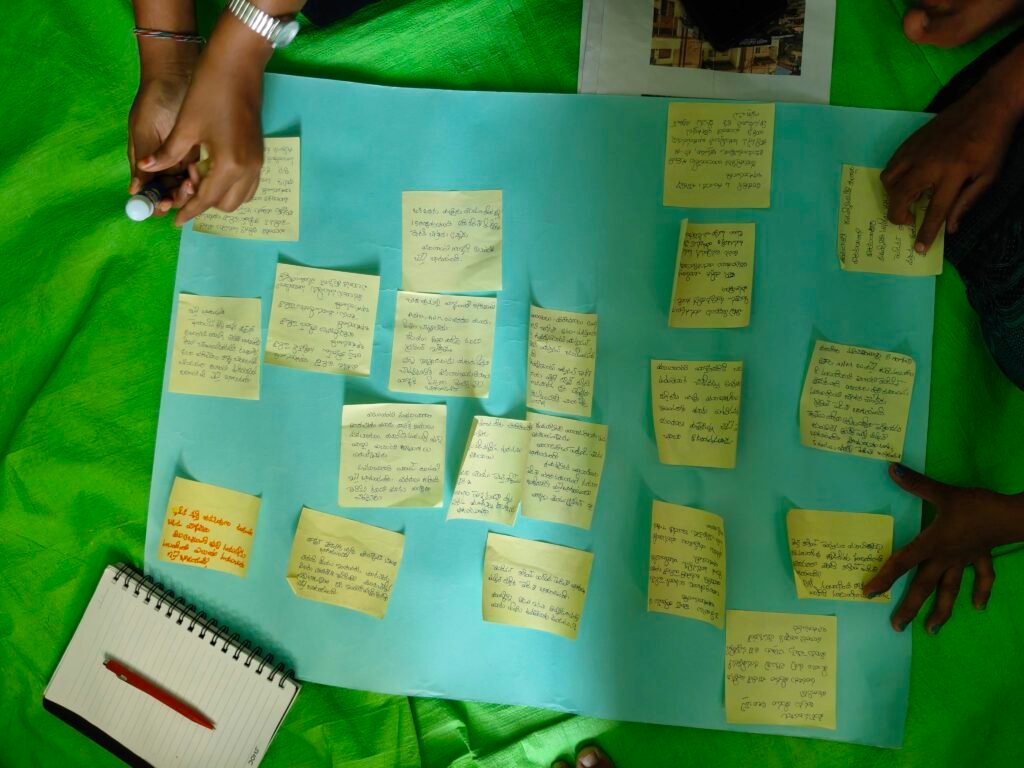
Consulting with the communities “What did you have for tiffin (breakfast)?” This question brings a smile to the faces of the people sitting in for community meetings of the Urban SHADE project. In these meetings that started in February 2026 are conducted in the community, the Vijayawada-Guntur team and the Shimla team discuss the findings and the proposed intervention of the Urban SHADE project.  The meetings have been set up in people’s houses within the community which they have generously opened for the Urban SHADE team, despite houses being small and cramped. In Guntur and Vijayawada, the hosts removed the cot from the house to make space for the duration of the meeting. In Shimla too, a friendly person’s house, public spaces such as grounds, or Anganwadi centres or even the lobby of a residential building were used for these meetings.  We are grateful to everyone who helped us organise these meetings. The meetings were conducted with different groups from different sites of the settlement- women, old persons, persons with disabilities, outdoor workers and those with chronic illnesses. In Shimla, meetings were also determined by the location- such as upper part of settlement, and the lower parts, and some occupational groups such as municipal sanitation workers. In Vijayawada and Guntur, the team hung relevant photos and distributed some photos among the participants that helped spark discussion among them. There were photos of cracked walls of houses, hospitals, garbage on the road, newspaper headlines of floods, flood warning messages or illustrations depicting heart illness among others. This technique helped a great deal in communicating the findings of the qualitative research including focus group discussions and in-depth interviews, especially since many of the participants were illiterate or semi-literate. Persons who participated in these meetings discussed the garbage in their areas, what happened during the floods, or their experiences in public hospitals or private clinics. Many people who attended the meetings said that they saw the messages sent by the government on flood warnings for the first time. They spoke about how they barely got food or water during the heavy floods in 2024. The community members also suggested their ideas for possible interventions.  In Shimla, the team presented an illustrated flow chart with the findings, gaps and the planned intervention activities. The team explained that the qualitative study presented cardiovascular diseases, musculoskeletal problems, skin disease, alcohol and drug addiction as problems facing the community. There are also increased out-of-pocket expenditures due to lack of ambulances and unavailability of medicines in government hospitals. The distance of the hospitals deters people from going there, especially older persons who are unable to walk up to main road, often leading to them missing out on follow-ups. Both informal settlements in Shimla do not have functional Primary health centres. Pregnant women and children have to go to hospitals further away to get basic check-up or immunisation. People reflected on how they are unable to sleep when during heavy rains. While they do get flood messages, they have no idea what action should be taken. The team also presented a general lack of awareness about the diseases caused due to extreme rainfall, and suggested interventions. These meetings helped validate the findings and also get buy-in from the community for the intervention activities still being planned. In Andhra Pradesh the team includes researchers Pavani Pendyala and Hemanth Chandu, field coordinator Satyanarayanamma Methukulla and community co-researchers Dasari Madhavi and Maddela Siva Parvathi. In Shimla, the team includes researchers Inayat Singh Kakar, Dr Yetika Dolker, and field coordinator, Sahil Kumar. 

Scroll to Top