mombasa

Events, Uncategorized

A safe space for a stronger, resilient community

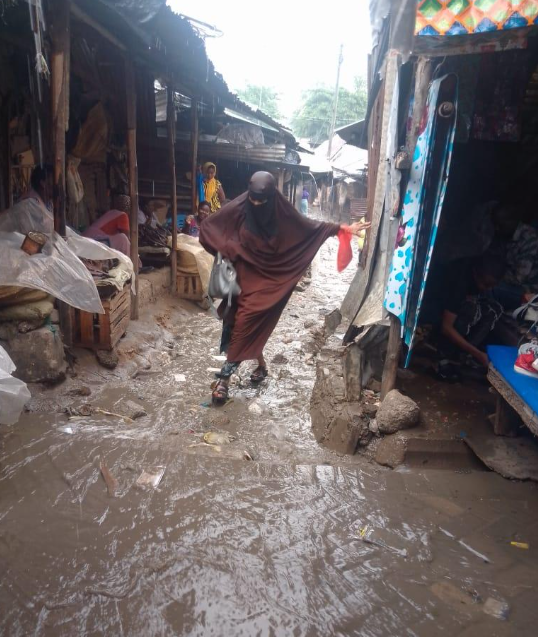
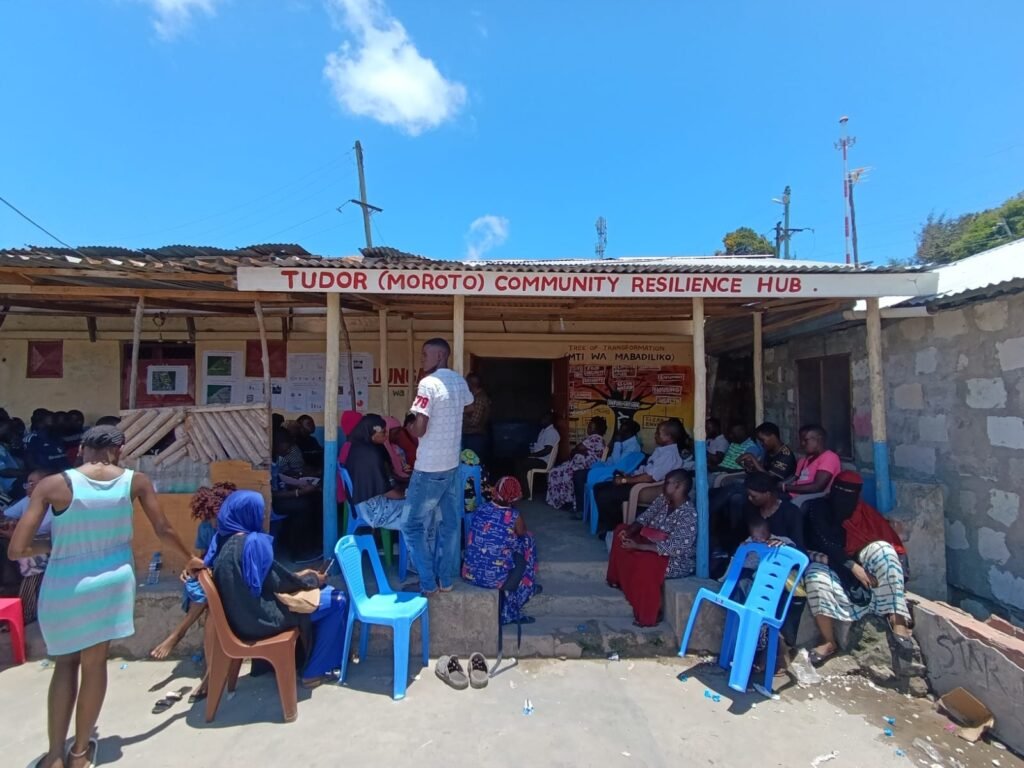
A safe space for stronger, resilient community Tudor Moroto, Mombasa A building within the informal settlement of Tudor Moroto in Simintini village has been adopted as a Resilience Hub. This Hub serves as a community centre, and is supporting community-led activities such as meetings, talks and will be developed as shelter space during extreme weather events.  The community members had expressed the need to establish a resilience hub to the Urban SHADE team in SDI Kenya during the initial research period in 2025 where the team members conducted several meetings to understand the health risks during extreme rainfall and flooding. The Urban SHADE team has advocated extensively for a health outpost in this area with Mombasa County. The Mombasa county health officials have conducted an inspection of the Resilience Hub built within Tudor Moroto to consider whether a health outreach facility can be built within the community. The county government is yet to submit a report on the same.  This space was identified after meetings with community leaders and negotiations with some members who were using the empty space for selling alcohol. After negotiations with the people who occupied this space, the community has taken ownership of the building and made it into a Resilience Hub. It’s a one-storey building with three rooms and empty open space.  “We had meetings with the village elders who identified this community space. It was earlier abandoned and during the night people used to sell liquor there. The elders and community leaders negotiated with the people who used the space at night to take their business elsewhere  so that the community can benefit from empty space,” said Bessie Sarowiwa, field officer with SDI-Kenya.  The idea for the Resilience Hub was sparked by the Tudor Moroto community, facilitated by SDI-Kenya and is now championed by the Muungano wa Wanavijijij, a social movement of people living in informal settlements in Kenya. The hub is being used by the community to hold meetings and discuss various issues concerning them including those under the Urban SHADE project and discussing further interventions. In Tudor Moroto, the houses near the Indian Ocean often get flooded during extreme rains. The community is envisaging this space as a safe shelter during such events. With small improvements to roofing, walls, and floors, the building can be a safe space during extreme weather events, such as floods, or extreme heat. SDI-Kenya with Muungano is looking to partner with organisations that can help provide food rations, blankets, medications which can help create a shelter space during extreme weather events.  With the removal of alcohol sellers in the area, the space has now become safe for families. It is now a space where children play during the evening, and women sit around and chat with their peers watching over children. The community is seeing a huge potential for developing this space further, especially a proper playground for children. The community is also clearing the pathway to the hub actively. The community members including men, women and the youth have been regularly coming together to clear and improve pathways leading to the Resilience Hub. The work includes clearing and levelling the pathway with saruji (crushed stones) as well as covering the sewers along the route. These cleaning exercises will help make the route to the Resilience Hub more accessible to everyone in the community, especially children, elderly, and persons with disabilities.  “It is critical that once the County government is ready to provide health services through this Hub, the access roads are better,” said Michelle Koyaro, Research Manager with SDI-Kenya.  The team is also co-designing public health modules for health workers related to extreme heat and extreme rainfall.  SDI Kenya is working with a consortium of organisations which are supporting youth leaders to be trained in supporting community mental health needs.  “The mental health needs are coming out strongly in our meetings with the community. There are feelings of hopelessness during and after extreme weather events. We are working towards embedding mental health aspects with flood and heat management,” said Koyoro. She added that there is buy-in about including mental health in the modules and training for health workers.  (With inputs and photos from Mejuma Mwamunga and Blonada Mwende)
Events

Community meetings in Kenya on proposed interventions

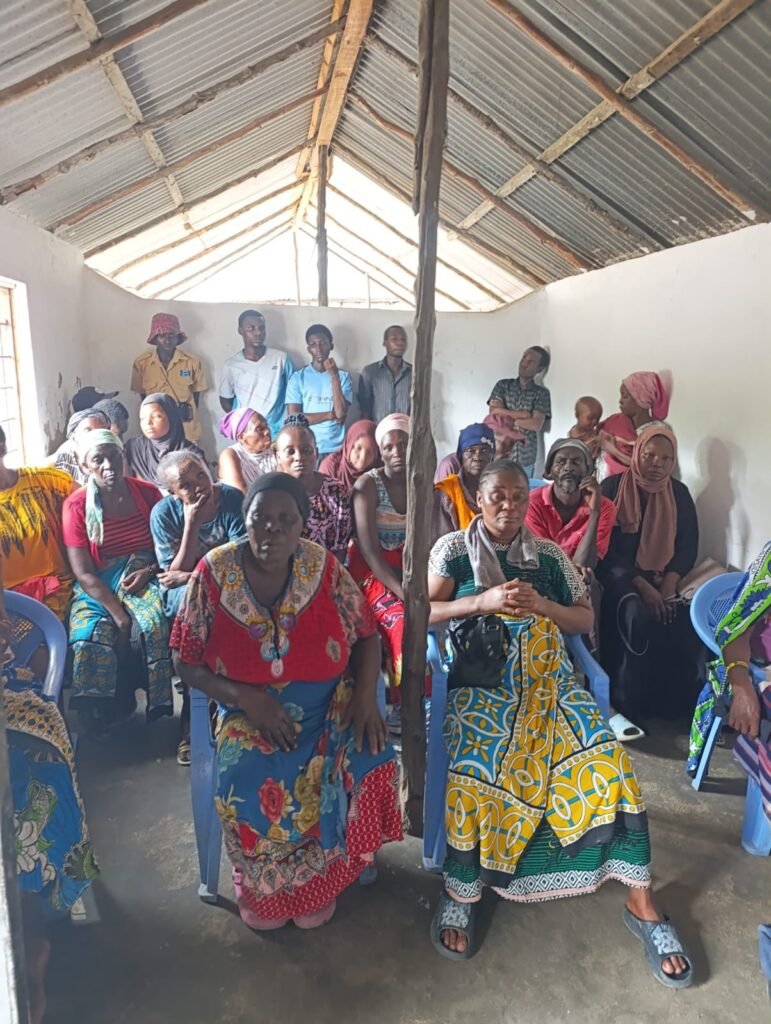
Consulting the community on proposed interventions in Kenya The Kenya team of Urban SHADE project is having community meetings explaining the findings, and talking about possible interventions.  The intervention proposed for all three communities– Tudor Moroto and Matopeni in Mombasa and Mibuyu Saba in Kilifi is co-designing training modules and protocols for health workers and community health workers with the health department on flood and extreme heat management.  One of the additional proposed interventions for Mombasa’s Tudor Moroto is the establishment of a community resilience hub which is intended to serve both as a community health facility, as well as a community centre. The proposition is that this hub can help increase access to healthcare during extreme weather events as well as become a hub for community meetings, support community activities and interventions and also serve as a rescue centre during disasters. The Urban SHADE team had several meetings with the community members starting with the local administration and village elders in February to get their buy-in on the interventions and support in mobilizing and organizing the community meetings. In the community meeting at Simitini village in Tudor Moroto, there was a discussion on the access road to the identified building for the resilience hub. The access road is currently narrow, and rudimentary. The access road to this building also becomes too muddy after the rains. The community members said that if they have the right material, such as cement, they can fortify the access road. They were unsure about involving the government as there were worries that the government could ask people to move out of their homes, without compensating them. On developing modules for health workers to tackle health-related issues of flood and heat, the community members from all three settlements said that they would like community members to be also involved in the training workshops and other activites related to disaster management, and health-related interventions. The Urban SHADE team will discuss this further in stakeholders meetings which are underway.

Blog, Kenya

Access to clinics during floods in Matopeni

Can You Reach a Clinic When It Floods?  Jane Njoroge It was 8 a.m. It was heavily raining in Mombasa’s Matopeni settlement. A young woman who has a walking disability had shida za mafua or chest complications in  Kiswahili. She needed to see a doctor soon. But, it was impossible to use crutches in almost knee deep water. Her mother and brother had to carry her out of the house to go to the doctor. There were no ambulances, or bridges.  During Mombasa’s rains, people living in its informal settlements have to brave the water, and the storm to reach any healthcare institution. They inevitably put off medical care because of the rains, and are often stranded and cut off from life-saving care.  This woman spoke to me and my colleagues from Slum Dwellers International-Kenya (SDI-Kenya) during a Focus Group Discussion in the Urban Shade project where we are trying to understand access to healthcare during events like these in four coastal settlements in Mombasa, and Kilifi counties, including Matopeni.  Matopeni settlement is located near the Kongowea market, perhaps the  biggest market within Mombasa Island, where people mostly work. The settlement is on land owned by the local Municipal Council, with private players staking claim to it. During the April-May qualitative data collection, it was raining heavily. It emerged in our discussions that this lack of functional infrastructure exposes the residents of Matopeni to climate-related disasters. This limits their accessibility to healthcare facilities, with pathways impassable. The focus group discussions with various stakeholders revealed that this challenge is harder felt by vulnerable populations within the locality. Children, especially pre-primary children cannot cross these flooded pathways due to the high possibility of being carried away by the force of flash floods.  As one resident put it, “During heavy downpour, the same pathways we use to access healthcare facilities are the same pathways used by water.” Matopeni during floods. Photo Credit: Muungano wa Wanavijiji, Matopeni. The disabled woman mentioned earlier said that her house tends to flood during heavy rains. As a result, she often catches flu and other ailments, and needs to see a doctor in her neighbourhood clinic. The adjacent pathways to her house are uneven and flooded, forcing her to rely on her mother and brother to carry her to the hospital. She said, “Flooded pathways are hard to navigate. I have to depend on my family to take me to the health facility. It is very hard to use crutches during flooding since the roads are covered by water, making visibility difficult, since the roads are not even and have potholes.” Uneven pathways that are not disability-friendly. The situation is further worsened when they become flooded, worsening visibility.  It’s not just residents who can’t reach clinics, sometimes, healthcare providers themselves are unable to report to work due to damaged infrastructure, effectively shutting down essential services when they’re needed most.  One respondent said, “When it rains heavily in the settlement, Kongowea dispensary also gets flooded. It is located on a flood plain. Sometimes even the medicines are carried away by the water. The government does not seem to bother, and nothing seems to change.” Kongowea Dispensary  Health consequences are felt by the community during and after flooding. For instance, stagnant floodwater becomes breeding ground for mosquitoes, increasing the spread of malaria and other waterborne diseases.   Stagnant water which act as breeding grounds Delays in treatment and care often lead to deteriorated health outcomes for the affected community members, especially for the most vulnerable groups. The community often crowdsources funds to arrange for a vehicle to take people who need urgent medical care, especially the elderly, disabled persons and people with underlying conditions to Tudor Sub County hospital. While this is heartwarming, it is neither always feasible or sustainable as a solution. There is a need to change this current situation in our informal settlements. The communities voiced thoughtful solutions during our focus group discussions. One such recommendation is the introduction of mobile clinics closer to the community to reduce accessibility time. At the moment, the communities have to travel for long distances, 3-5 kilometers, to get crucial and quality healthcare service. Transport to access this service has financial implications.  There is a need for some major infrastructural changes in the community, especially in relation to the drainage system. An effective drainage system, and regular sanitation work to unclog waste can ensure more accessible pathways even during heavy rains. Flooded pathways and common areas in Matopeni Some of these problems can be taken care of by the community. A government initiative- National Hygiene Program dubbed Kazi Mtaani, a social protection programme that employs youth to help in clean up programmes in these settlements. The initiative started during 2020 in the thick of the COVID-19 pandemic in response to its major economic impact, especially on vulnerable communities. It is designed to help the youth living in informal settlements by providing them labour-intensive work for daily wages that can help create public goods for the community they live in including clearing garbage and opening clogged drains etc.  A youth community member, actively involved in Kazi Mtaani scheme, said, “I have worked in that area during the Kazi Mtaani programme. I suggest an initiative to the youth to start collecting wastes at 20 shillings per household.” Policymakers, urban planners, non profits and communities need to connect climate change with health-related impacts, and prioritise inclusive, climate-resilient urban planning that ensures everyone, regardless of where they live, can access essential services, even during disasters. Infrastructure is not just about concrete and roads. It is about dignity, safety, and survival. No one should suffer life-altering health complications simply because they can’t reach help when it rains. Jane Njorage is an intern in the research department at SDI Kenya, and is currently pursuing Masters in GIS and Remote Sensing

Scroll to Top