Musings

Musings

Nowhere to go

Nowhere to go Dr. Abu Conteh It’s 12pm on a bright beautiful Monday morning, and the sun is beginning to get ahead of me. I am visiting the Soja town section of the Moyiba community to talk to Sia, whose house was recently destroyed by a mudslide. Moyiba is one of the most deprived informal settlements in Freetown, which is also exposed to multiple hazards including mudslides. Sia is a single mother of three who makes a living from stone mining. As I ascend the over 600-meter-high hill, I couldn’t help but wonder how women in this rugged part of the community deal with climate hazards and access healthcare. In the past years, women in this section of the community have had to deliver babies by the side of the road as they couldn’t make it to the only government health clinic in time about 3 kilometers away. Transportation here is a challenge, as motor bike riders complain of rugged roads. As I arrive at Sia’s home, she greets me warmly and offers me a seat in her delipidated single bedroom mud house that was destroyed by a huge boulder (in 2025). The house is now a relic of the original two-bedroom house built by her husband who died two years ago. “The destruction of the house has changed my life so badly”, she said. She recounted her daily horrors of having to live in a leaking house or rebuilding it withher meagre income. “I can barely feed by children, let alone rebuild this house.” As I looked around, I could see that most houses here are built with mud bricks, which makesthem vulnerable to extreme weather events such as flooding and mudslide. Sia recounts she is not the only woman affected. ‘‘Last year, one woman lost two children because of a mudslide,” she said. While she feels the community is not safe, she is worried about having to leave a whole life behind that she has built for over a decade. ‘‘I have nowhere to go. We are not offered any help by the ‘’big ones.’ No one has helped me since my house got destroyed,” she said.
Musings, Uncategorized

No future

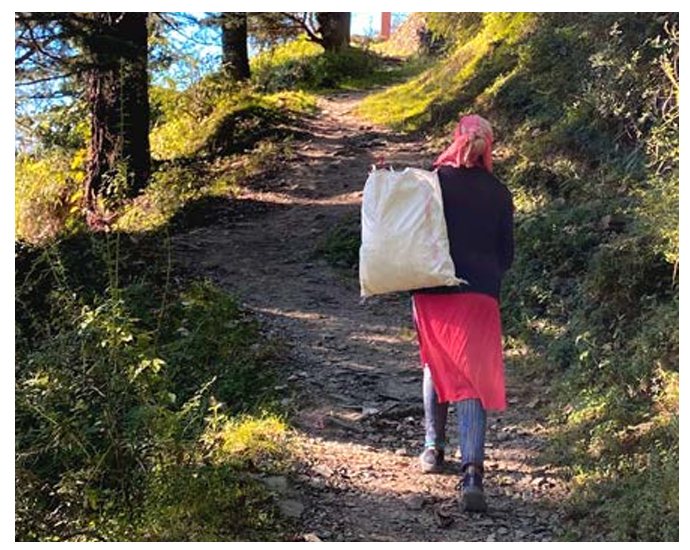
Menaka Rao Ashu waited for me outside the hotel. He is a skinny man, and was visibly uncomfortable standing in the lobby of the hotel. He insisted on meeting me in the hotel, and not in Krishna Nagar, where he lives. He says his father was a municipal waste worker. But he drank so much that the children could not go to school. Ashu dropped out of school in his 7th standard. He became a contractual waste picker after his father’s death.  “There is no future in this work, Madam,” he told me, shaking his head. He feels the futility of his job, while not being able to see a way out. “I just don’t want to go to work, especially during the monsoon. The waste which I carry on my back just gets right into my clothes and trickles down my body. There is dal, curry, all kinds of food,..,” he said, trailing off and making a face full of disgust. His school-going son asked him one day why he did waste work. “I felt very bad that day,”he said. During one monsoon, about ten years ago, his family had to leave the house, built by his grandfather, because it got dangerous. The floor of his house cracked further and further, threatening to collapse. “We kept thinking the floor would stop caving, but it kept getting worse,” he said. They now live in a rented premise, cutting into their meagre income. So when he fractured his leg this year because of an accident at work, he had to borrow nearly Rs 20,000. He was out of work for three months.  “There is no future in this work, madam,” is his only refrain.

Musings, Uncategorized

Bahari

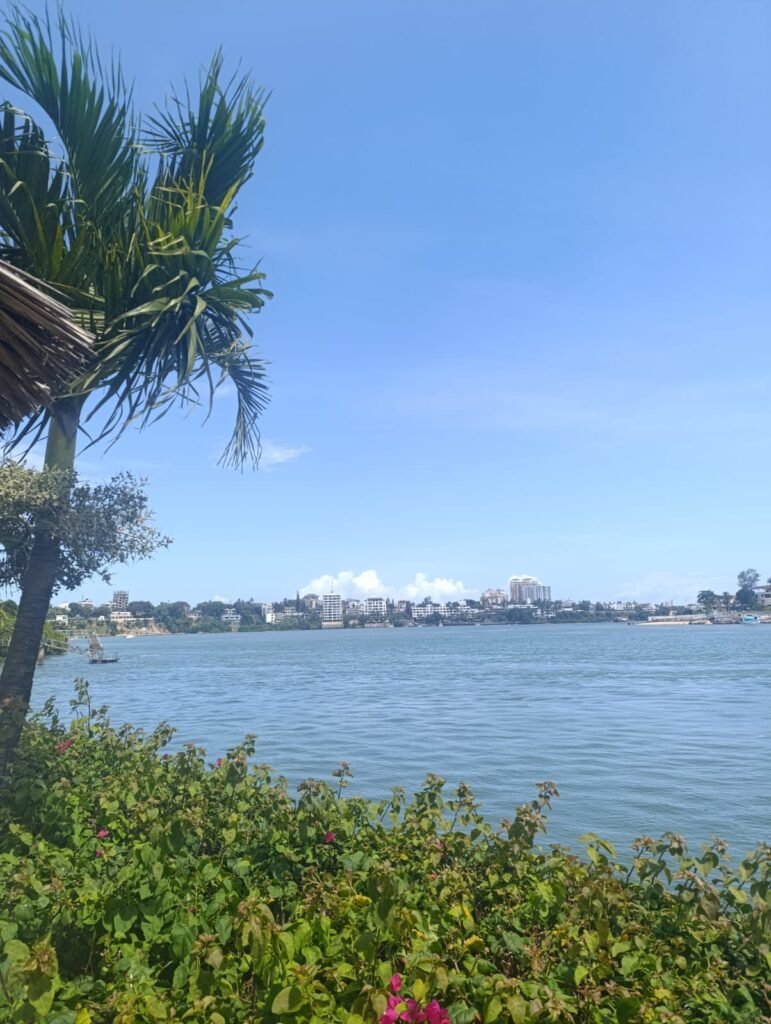
Bahari Bessie Sarowiwa She’s big, she’s blue, she’s bold. She’s Bahari. For many years Bahari gave life to many and offered refuge to many more in Tudor Moroto, like a mother. She’s watched us grow up and was always there when we needed her. We played with her when we were kids and learned to swim in her cool waters. She gave us a place to relax when the heat was unbearable. She provided food for us when our parents came back with nothing. She liked having us around and never complained. But not anymore. She has changed. She doesn’t seem happy these days and the glow that she once had is no longer there. The beautiful blue she once had is now more of a blue green. And the cool breeze she would give us when heat was unbearable is now just hot air and a stench. The food she shared with us has dwindled and it appears that all the fishermen catch now are plastic bags and used diapers. The places we would go to play with her are now places we warn visitors about because they never know what they may step on. All the people that relied on her for their basic needs are now struggling to even get through the day. It breaks my heart. How did we end up here? Bahari, did we do this to you? That’s what everyone is saying. That our actions are what made you this angry. We cut down the trees that fed you and kept you clean to build houses. You were nice to us but instead we paid you back with food and sewer waste. You’re now threatening to leave us.   Please don’t give up on us, Bahari. We’re trying to do better. We’re learning from our mistakes. It might be a little late but it’s the least we can do. 

Musings

Battered and bent, but still standing

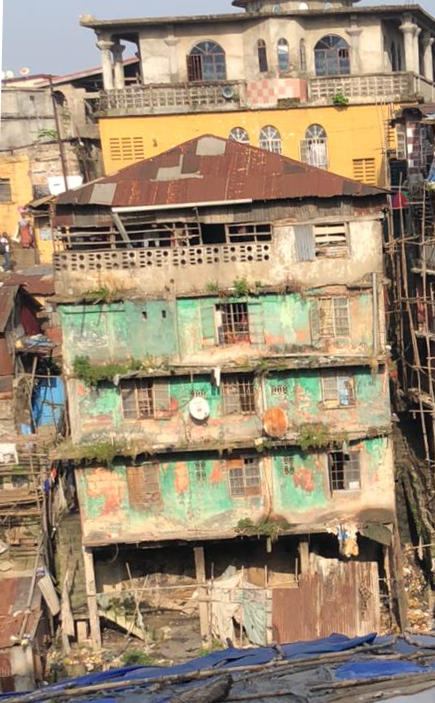
Battered and bent, but still standing Desta Ali Down the long, steep, steps of Susan’s Bay stands a tall, green five-storey building. It looks weathered and worn, but it stands stubbornly and quietly. During the day it is virtually empty, but I’m sure it houses more than hundred people at night. There is a lot of cracks in its concrete; its roof is made of rusted metal sheets. The building tells a story of time. Every time I look at it, I hear it say, “I have survived many floods, yet I am still standing. I am a survivor.” It almost makes me fall in love with it, because it reminds me of myself, standing tall in the midst of trials, keeping my head high, and trying very hard not to crumble. The glasses on the windows are broken, yet the bars are still holding on, almost as if fighting hard to maintain security. The top floor of the building is unpainted. That means it has been added recently to create more space for more people. The bottom floor is incomplete and wrapped with tarps and more rusted metal sheets. It was possibly built as a garage but is now being used as an accommodation for a desperate family. This tells a story of greed, because someone has decided that making money from rent is more important than the safety of people. I admire the building for all it has gone through and all that happens within its walls. But I also feel sorrow and dread. I know it’s only a matter of time before it crumbles. The land it is built on is a coastal land and not meant for buildings. I am sure its foundations were not made to carry that much weight. I always ponder how many more floods can it survive? How much more erosion can its foundations take? My only hope is that when that day arrives, it will happen during the day, when no one is home.

Scroll to Top