
India

Blog, India

Experiences of co-creating survey with communities facing climate health risks

Experiences of co-creating survey with communities facing climate health risks In late October 2025, the Urban SHADE project in India will start on data collection related to the household level survey in the informal settlements in Shimla in Himachal Pradesh, Vijayawada and Guntur in Andhra Pradesh. The household survey aims to understand health impacts and vulnerabilities of people living in informal settlements, as well as the extent of care available to them in public health facilities during and following extreme weather events. The Urban Shade Project, aims to strengthen  health services for people living in urban informal settlements, to respond to impacts of extreme weather events. The enumerators in both states underwent an extensive training programme in September, which covered the details about the project, ethics of data collection, mapping and use of survey software. The project has involved the community in every step of the way.  The design of the survey tool – Household Survey: Social and Health Vulnerability Assessment related to Extreme Weather Events– was led by a member of the research team, Malini Aisola with extensive inputs from research and field team members. The survey includes social demographic profiles of household members, access to utilities and infrastructure, access to health services, housing, past impact of extreme weather events, people’s perceptions, awareness and responses on extreme weather events. The survey will be conducted in informal settlements in Vijaywada-Guntur, and two informal settlements in Shimla. The two extreme weather events we are looking at in the project are extreme heat and extreme rainfall/flooding.Through the household survey, the team aims to generate context-specific data about a variety of indicators of social and health vulnerability, and provide insights about how they shape experiences of extreme weather events. For example, those living in the poor quality houses, and do informal work may feel the impact of extreme heat more.The survey would enable granular descriptions at the settlement-level of prevailing conditions that could inform government policies and local preparedness planning including provision of health services. Consulting the community on survey tool The Urban SHADE research teams had fortunately worked with some of the settlement sites in the project earlier in another project called Accountability for Informal Urban Equity (ARISE), an action research project focussing on health and wellbeing of sanitation workers. In some other communities, efforts were made to engage with the community in a meaningful way before data collection. In Eidgah colony, a public meeting was organised with support from key stakeholders including the Maulvi of the mosque, the ward councillor, community leaders, an official from National Health Mission and ASHA workers in the settlement.  Anmol Somanchi, a developmental economist and member of the research team in an advisory capacity, helped the team develop a conceptual framework for measuring vulnerabilities. After developing a basic draft with inputs from research and field team members, our team presented it to the members and stakeholders of the settlements in Vijayawada, Guntur and Shimla.  The workshops included residents, community leaders, elected officials, health workers, civil society members of these settlements we are studying in including Krishna Nagar, and Eidgah colony in Shimla, Vambay colony and New Raja Rajeswari Peta (also called RR Peta) in Vijaywada, and Sarada colony in Guntur. The one-day workshop was organised by the research team of Inayat Singh Kakar and Yetika Dolker in Shimla, and Pavani Pendyala and Hemanth Chandu in Vijayawada in May.  Apart from talking about the survey, key questions were read out and displayed in the workshop to the community members to discuss their relevance, the way they are worded, as well how the data could be relevant to the community for advocacy. Community members gave suggestions on improving the questions as options to click to elicit an appropriate answer.  Mahesh aka Shiva who lives in RR Peta gave suggestions to simplify the Telugu questions, making it closer to spoken language rather than very Sanskritised. “In the workshop, you  (Urban SHADE team) asked us whether we were able to understand the language or not, and modified the questionnaire based on the language we were able to understand,” said Mahesh.  The workshop helped the research team to overcome engagement challenges in one of the settlements in Andhra Pradesh who were unfamiliar with the research teams’ work and helped familiarise them with the research. These members helped facilitate community engagement for the researchers. Reena Chauhan, Accredited Social Health Activist or ASHA worker works with the community in Eidgah colony. ASHA workers work closely with the communities and link them up with services in the public health facilities. Asha workers used to conduct government-related surveys.  “For the first time, someone has asked us anything before conducting any kind of survey. Usually we are just asked about our targets related to our work in taking pregnant women for check ups or checking on newborns, or motivating tuberculosis patients to take their medicines,” said Reena Chauhan, ASHA worker in Shimla Taking feedback from the community is in line with participatory action research methodology which this project is committed to. It also adheres to the principle laid down in the Human Rights Approach to Data, that talks about including means for active, and meaningful participation of relevant stakeholders, especially the most marginalised population groups during the entire data collection process including planning before the survey roll outs.  Deciding boundaries of the settlement For the project and particularly for the survey, it was important to determine the boundaries of the settlement- what part of the settlement will be covered for the survey, and what will be left out. The boundaries then determine where the enumerators and researchers 1can move around and conduct the survey.  In Vijayawada and Guntur, there were some areas adjoining the informal settlements where the middle class families lived in visibly well-made houses. The project’s Vijayawada-based researcher, Hemanth Chandu sat with community persons, Madhavi, Kosamma, Mahesh and Shiva in RR Peta and Vambay Colony, Vijayawada and Akkamma and Shiva Parvati in Sarada Colony, Guntur. Of these, Madhavi and Shiva Parvati are community
Events, India

Enumerators workshop India

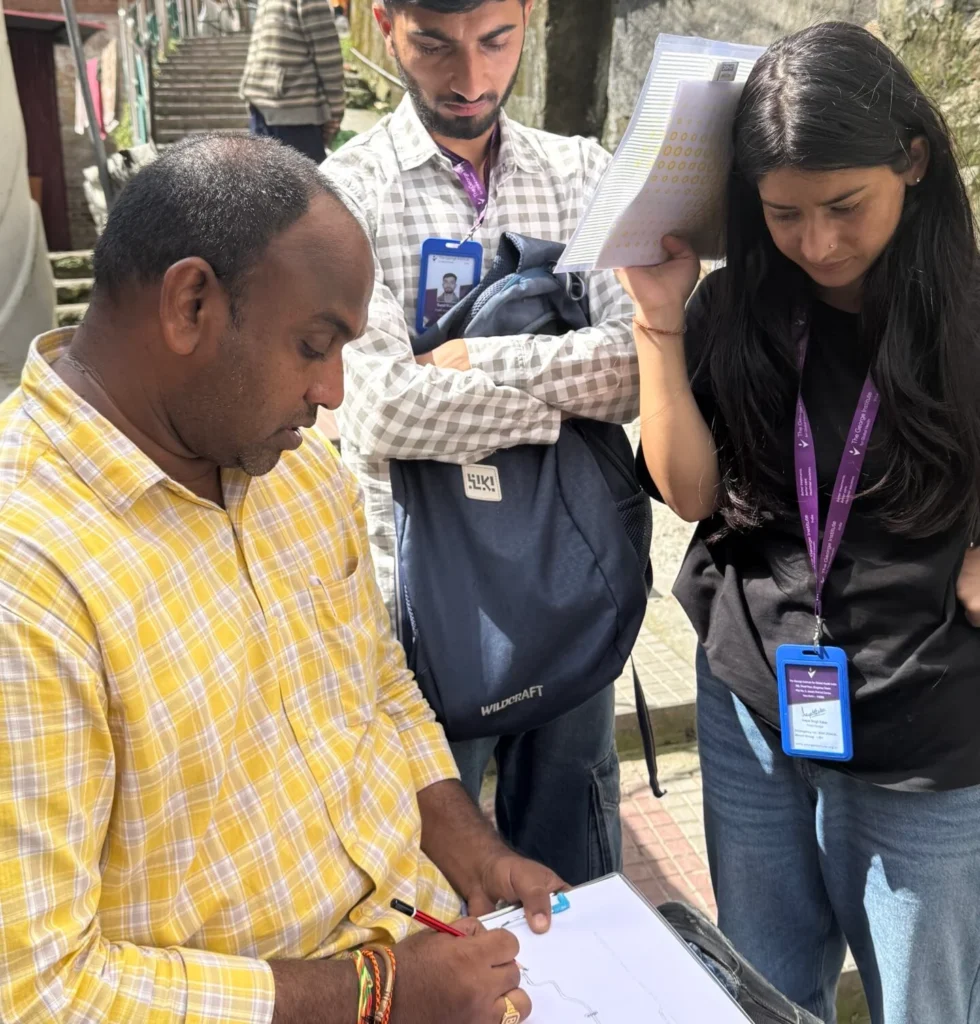
September 2025 Household Survey Enumerators workshop, India  The Urban SHADE project in India conducted a training of enumerators for conducting the Household Survey: Social and Health Vulnerability Assessment in September. The workshops were held first in Vijayawada and then Shimla in five-day spans between September 8, 2025, to September 22, 2025.  In both the workshops, the research team conducted a focus group discussion with the enumerators to get a pulse on their understanding and knowledge about the different informal settlements we are studying, impact of extreme weather events in such settlements among others. Many of the enumerators who had prior experience conducting surveys participated wholeheartedly on their understanding of extreme weather events, and the various challenges in conducting surveys in the field.  The research team including Hemanth Chandu, Malini Aisola, Inayat Kakar and Yetika Dolker explained to the enumerators about the Urban SHADE project and broadened their understanding of extreme weather events and how it affects people with different vulnerabilities especially the poor who live in informal settlements, disabled, or those with precarious jobs, or with chronic illnesses differently. Each section of the survey, and their questions were explained to the enumerators. The sessions covered Ethics related to data collection in great detail. It was emphasised that the data collection must be implemented consistent with the principles of the Human Rights Based-Approach to Data. The research team spoke about maintaining confidentiality and privacy of the people who will be asked questions from the questionnaire. The enumerators were made aware of the gender and cultural norms that could come to play while conducting the survey. The research team also highlighted that data collection should not lead to further discrimination among the already marginalised communities that the Urban SHADE project works with.  The interviewers were given detailed instructions on preparing for the survey, introducing themselves, obtaining consent, and taking a survey. The participants were given mock practice sessions where one of them played the respondent and other played the enumerator.  The situations included dealing with a busy mother who had no time, or a person concerned about the survey leaking information to the government. The situations which were designed to be tough helped the enumerators practice their skills in seeking consent and trying to convince people for a survey by being transparent and respectful. The role-playing activity broke the monotony of the typical workshop with presentations.  Balaji Rao Nemala gave hands-on training on how to map settlements where the survey is to be conducted. Nemala (photo below) who is the Project Manager with The George Institute, has handled trials all over India in both urban and rural settlements. Mapping literally means drawing a map of the settlement on paper. Nemala guided the enumerators in the field on how to map the structures in a way that they do not miss a single house. This exercise gets complicated in informal settlements, which barely have any straight paths. In Shimla this was compounded by the fact that the settlements are on hilltops which required a lot of physical labour of climbing up and down the hilltops. The enumerators covered the length and breadth of the settlements marking structures in each of the narrow lanes of the settlements. The people in the settlements who were curious about the exercise asked them about it, giving the enumerators a chance to explain the survey to them.  Bijini Bahuleyan, Data Manager withThe George Institute made the data base for the survey which is to be conducted in Telegu and Hindi. She also helped participants log on RedCap software which will be used for data collection in the survey, and trained them on how to use the software for data collection.  The survey is expected to begin in October. In Vijayawada and Guntur informal settlements (Vambay Colony, RR Peta and Sarada Colony), the survey will be conducted in Telegu. In the Shimla informal settlements (Krishna Nagar and Eidgah colony), the survey will be conducted in Hindi.

Blog, India

When an informal settlement has no PHC

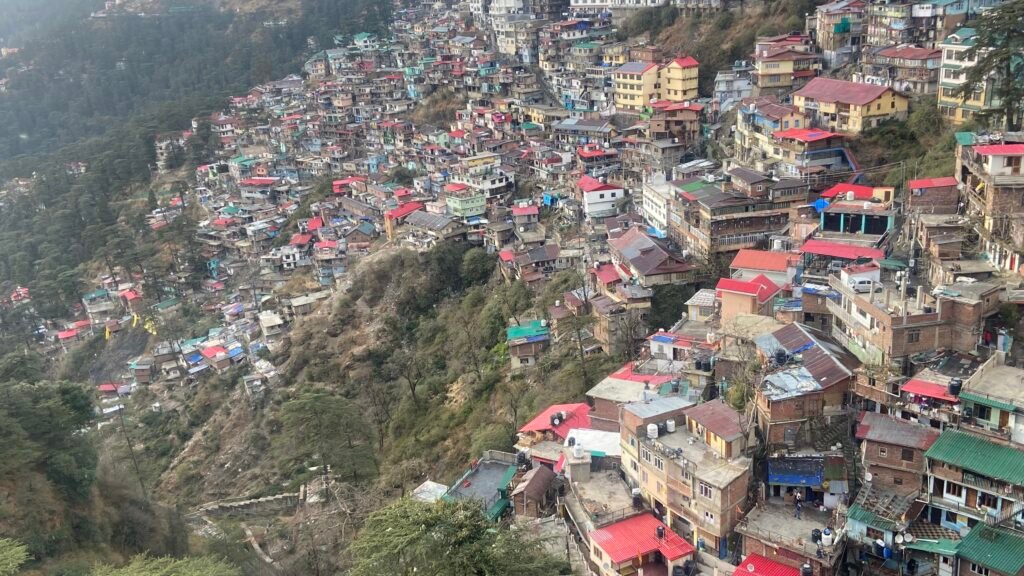
When an informal settlement has no PHC Yetika Dolker As a public health professional, I have worked in the remote and rural areas of Lahaul-Spiti and Kinnaur in Himachal Pradesh to Udaipur in Rajasthan and in the plains of Bihar.  I now with the Urban SHADE project with urban marginalised settlements in Shimla. Urban and rural health care systems are worlds apart. In rural and remote areas, reaching the facility is difficult because of extreme climate or rugged terrain. Often there is a lack of trained health personnel, or diagnostics or treatment provision in these areas. In urban areas, the public health challenges are different as I have discovered while working with informal settlements in Shimla, the capital of Himachal Pradesh. While urban areas have better access to advanced healthcare facilities, trained healthcare personnel and technology, the most basic level of health care is often lacking. Especially for people who need it most- the urban poor who live in informal settlements. People here are also more vulnerable to diseases as they lack access to safe drinking water, sanitation, good nutrition. Climate change and its effects also affect these vulnerable persons more. Hidden health risks In Shimla extreme rains, landslides, flooding, treefalls and rock falls are common during the monsoon. The Urban SHADE project works in Krishna Nagar settlement and Idgah colony in Ruldu Bhatta. Both are informal settlements, perched atop the edges of hills making them even vulnerable to landslides and floods. A major landslide in Krishna Nagar in 2023, felled an entire slaughterhouse in the colony, and killed at least two persons. The houses here are often overcrowded, with poor ventilation, sometimes stinking due to garbage. There is barely any sanitation here. “Dog’s potty is everywhere. Walking around it is like playing stapu (hopscotch). In the rains, the muck gets inside the shoes. What to say. We live in such filth,” said a woman who lived in Krishna Nagar in a focus group discussion (FGD). “It appears that all the filth from the city comes and collects here. The gutters are open and flowing. Walking in the pathways makes you feel dirty,” woman from Krishna Nagar said. Public washrooms remain dirty, and women in these colonies say they suffer from pelvic infections as a result. The water supply is often contaminated, and people say they get gastrointestinal diseases as a result. “When there is a water cut, often the water supply is contaminated. We have heard of jaundice cases in many houses in those periods,” said a woman from Idgah colony. Residents here complain of deliberate neglect by municipal authorities. “Why do you think other areas in the city are not so dirty, madam,” asked a woman from Krishna Nagar. “The other areas in the city are so clean, and neat. It appears that all the filth from the city comes and collects here. The gutters are open and flowing . Walking in the pathways makes you feel dirty.” No PHC in the settlements To top all these existing health problems, there is no subcentre or primary health care centre (PHC) within both these settlements. A PHC or dispensary is the first point of contact in any health system. A strong and comprehensive primary health care facility can improve the healthcare access for the people and reduce the load in tertiary hospitals, not just by treating ailments, but also with preventive and promotive health care. Even though Shimla’s medical college and zonal hospital are within 5-6 kms from these two settlements, the residents are compelled to go to these hospitals even for small health issues or ailments that can be tackled at primary health care level such as diabetes. There are many persons in these colonies who suffer from chronic ailments such as hypertension, and diabetes or from respiratory illnesses such as tuberculosis, skin diseases and pain in bones and joints. They do not have motorable roads near their houses and must climb up several levels to reach the main road and catch a vehicle. The residents of Krishna Nagar and Idgah colony are garbage collectors, daily wage labourers, and small vendors, many of whom are migrants from other states or within the state. Families lose one- or two-persons’ daily wages (if the patient needs an attendant), having to spend money on travel, and medicines. These factors make the visit to hospital daunting, often leading to late diagnosis or loss to follow-ups. “Our elderly here have cases of blood pressure. Their blood pressure increases while they climb up the hill to reach hospital. We really need a dispensary here,” said a woman from Idgah colony. Take the case of tuberculosis diagnosis and treatment. Usually, the diagnosis as well as treatment of regular TB cases can take place in a PHC in India. Patients are often sent by primary health workers such as Auxiliary Social Health Activist (ASHA) workers, or Auxiliary Nurse Midwife (ANM). But the absence of a PHC snaps the link between the community and public health systems. An ASHA worker told us that a woman in her 50s died of TB last year in Idgah colony. She was diabetic that makes her more susceptible to the disease, and treatment tougher. By the time the lady sought proper treatment, it was too late. In Krishna Nagar, a 41-year-old man was diagnosed with TB did not to continue treatment in the government hospital, but wanted to consult private practitioner, presumably because it’s easier to access. When we asked an official from Integrated Disease Surveillance Programme (IDSP) about the health specific data of Krishna Nagar and Idgah colony, he told us that they don’t have settlement specific data. The lack of PHC also stalls surveillance in these areas. Primary health workers who are usually attached to PHCs have no health institution to directly raise concerns. Climate change To top this, climate change effects pose a huge risk for people in these settlements. People here already dread every monsoon, as they are at risk of landslides. In Idgah colony, the

Scroll to Top