freetown

Musings

Nowhere to go

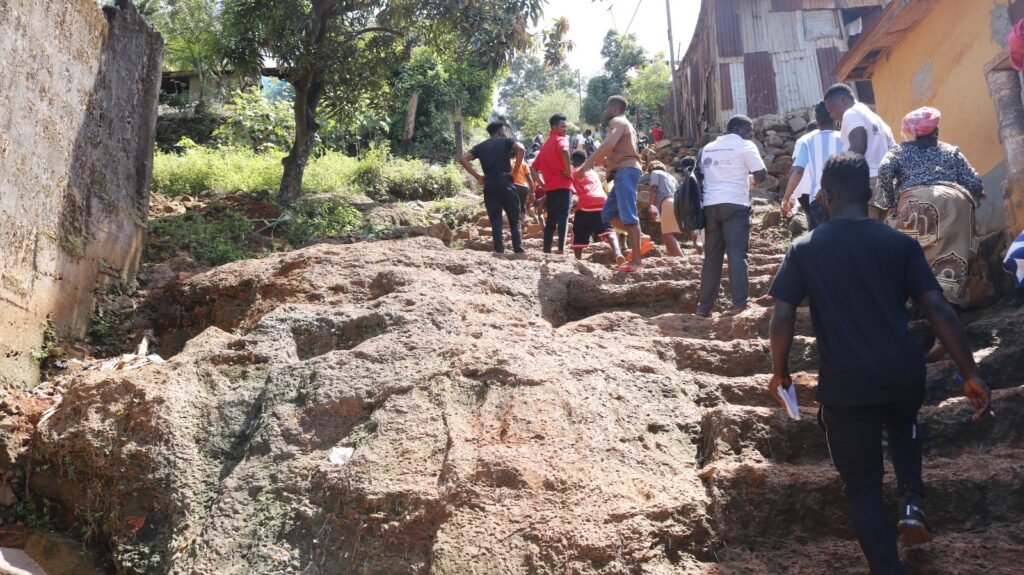
Nowhere to go Dr. Abu Conteh It’s 12pm on a bright beautiful Monday morning, and the sun is beginning to get ahead of me. I am visiting the Soja town section of the Moyiba community to talk to Sia, whose house was recently destroyed by a mudslide. Moyiba is one of the most deprived informal settlements in Freetown, which is also exposed to multiple hazards including mudslides. Sia is a single mother of three who makes a living from stone mining. As I ascend the over 600-meter-high hill, I couldn’t help but wonder how women in this rugged part of the community deal with climate hazards and access healthcare. In the past years, women in this section of the community have had to deliver babies by the side of the road as they couldn’t make it to the only government health clinic in time about 3 kilometers away. Transportation here is a challenge, as motor bike riders complain of rugged roads. As I arrive at Sia’s home, she greets me warmly and offers me a seat in her delipidated single bedroom mud house that was destroyed by a huge boulder (in 2025). The house is now a relic of the original two-bedroom house built by her husband who died two years ago. “The destruction of the house has changed my life so badly”, she said. She recounted her daily horrors of having to live in a leaking house or rebuilding it withher meagre income. “I can barely feed by children, let alone rebuild this house.” As I looked around, I could see that most houses here are built with mud bricks, which makesthem vulnerable to extreme weather events such as flooding and mudslide. Sia recounts she is not the only woman affected. ‘‘Last year, one woman lost two children because of a mudslide,” she said. While she feels the community is not safe, she is worried about having to leave a whole life behind that she has built for over a decade. ‘‘I have nowhere to go. We are not offered any help by the ‘’big ones.’ No one has helped me since my house got destroyed,” she said.

Musings

Battered and bent, but still standing

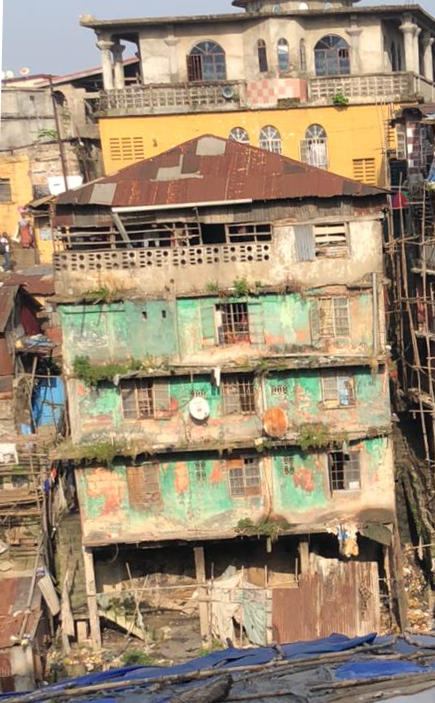
Battered and bent, but still standing Desta Ali Down the long, steep, steps of Susan’s Bay stands a tall, green five-storey building. It looks weathered and worn, but it stands stubbornly and quietly. During the day it is virtually empty, but I’m sure it houses more than hundred people at night. There is a lot of cracks in its concrete; its roof is made of rusted metal sheets. The building tells a story of time. Every time I look at it, I hear it say, “I have survived many floods, yet I am still standing. I am a survivor.” It almost makes me fall in love with it, because it reminds me of myself, standing tall in the midst of trials, keeping my head high, and trying very hard not to crumble. The glasses on the windows are broken, yet the bars are still holding on, almost as if fighting hard to maintain security. The top floor of the building is unpainted. That means it has been added recently to create more space for more people. The bottom floor is incomplete and wrapped with tarps and more rusted metal sheets. It was possibly built as a garage but is now being used as an accommodation for a desperate family. This tells a story of greed, because someone has decided that making money from rent is more important than the safety of people. I admire the building for all it has gone through and all that happens within its walls. But I also feel sorrow and dread. I know it’s only a matter of time before it crumbles. The land it is built on is a coastal land and not meant for buildings. I am sure its foundations were not made to carry that much weight. I always ponder how many more floods can it survive? How much more erosion can its foundations take? My only hope is that when that day arrives, it will happen during the day, when no one is home.

Blog

How terrain of the informal settlements has impact on health

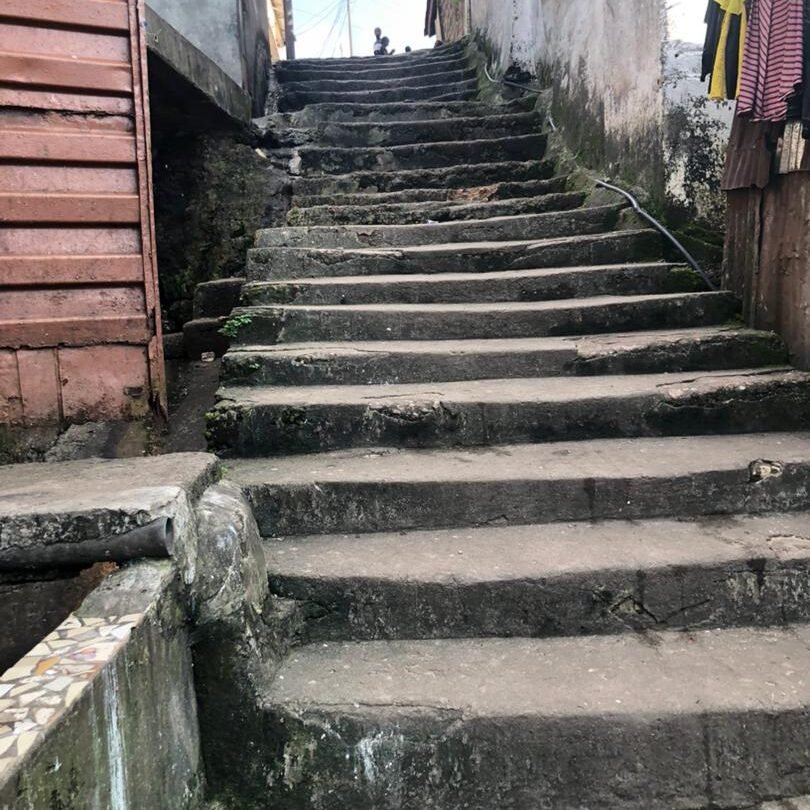
How terrain of the informal settlement has an impact on health  Almenatu Samura It is well known that living in informal settlements poses a risk to health because of lack of formal recognition, and the residents facing various socioeconomic, environmental and political exclusions. In the coastal informal settlement of Susan’s Bay, one’s access to health is also determined by what part of the settlement she lives in.  Since the settlement is built on steep, tiered landscape, people living in the lower parts of the settlement have to climb long flights of uneven stairs to get anywhere. This includes going to the only public health facility, Susan’s Bay Community Health Centre that serves the settlement, which is perched on the upper end of the informal settlement.  While this reality touches every resident, it falls heaviest on the most vulnerable groups persons with disabilities, the elderly, children, and especially pregnant women.  The terrain makes daily movement for residents, especially vulnerable ones, exhausting and sometimes impossible. “There’s no part of the community without staircases. To exit the area, you must climb, which is a major challenge for us,” one resident explained. Residents at the lower end of the settlement struggle to reach it, especially during medical emergencies, and disasters such as fire and storms. In 2021, a massive fire swept in Susan’s Bay injuring hundreds of people and destroying much of the infrastructure. The lack of roads prevented fire engines to reach the community to put out the fire. Life-threatening delays during childbirth Pregnant women find the uphill journey daunting, often missing critical antenatal appointments or experience life-threatening delays to reach the health facility during labour. The consequences are devastating from miscarriages and preventable complications to tragic maternal and newborn deaths. The community members talk about cases where pregnant women have failed to reach health centre, losing their lives.  As per the latest UN estimates, Sierra Leone has made strides in reducing the maternal mortality ratio from 1682 deaths per 100,000 live births in 2000 to 354 in 2023. But 354 deaths per 100,000 live births is still too high a number- about three maternal deaths a day. Stories of women dying of childbirth abound in the settlement.  A community leader speaks about the case of a pregnant woman who died of childbirth after she could not reach the health centre. She lived in the lower end of the informal settlement. “The pregnant woman was unable to reach the health center. She returned home and delivered with a traditional birth attendant (TBA). The mother couldn’t make it out alive,” recalled a community leader. After the complications, the woman was taken to the health facility where an emergency C- section was done.  Beyond the steep terrain, narrow and congested roads compound the crisis. Traders often line the pathways, leaving little space for movement. The environment is physically inaccessible, disaster-prone, and socially excluding. This is especially true when a fire breaks out, or during floods when it is impossible to move fast. A disabled resident said that being carried on someone’s back is “dehumanising.” No “free” healthcare There are other barriers to access to healthcare. Despite the Free Health Care Initiative (FHCI) that was launched in 2010, people talk about hidden costs, medicine shortages. Informal payments keep many away from clinics.  Many residents living in Susan’s Bay lack reliable income and the rising cost of living is deepening their hardship. This hardship is compounded for vulnerable populations who then depend on informal health care rather than the formal system.  “I don’t have a steady job, so if I can’t afford tests or drugs, I simply go without treatment,” said a man with a disability. A recent Human Rights Watch report looking at obstetric violence in Sierra Leone said that indigent women are at a higher risk of obstetric violence if they cannot make informal cash payments to staff in government facilities for services, drugs, and other commodities, even if in an obstetric emergency. The report is based on more than 130 interviews with patients, healthcare providers, government officials, and public health and policy experts in Sierra Leone  in 2024 and 2025. Community health workers say that many pregnant women too are abandoned by their partners, left to fend for themselves. Accessing formal healthcare becomes daunting for such women. In the face of these barriers, community health workers (CHWs) serve as the invisible bridge between the health system and those most at risk. They identify pregnant women who have not registered for antenatal care, provide referrals, and raise awareness on safe delivery practices. “Some women never attend ante-natal until CHWs visit them at home. Many don’t even have antenatal cards,” said a CHW. Without their outreach, maternal and newborn deaths in Susan’s Bay would likely be far higher. Susan’s Bay’s story is not an isolated one. Across Sierra Leone’s informal settlements, residents find it difficult to access healthcare. Addressing this requires more than infrastructure; it demands inclusion, empathy, and sustained attention.  To build resilience in Susan’s Bay, interventions must prioritise accessible and inclusive healthcare facilities, improved mobility pathways for persons with disabilities and the elderly, community-based maternal health programs, livelihood support for vulnerable women and people with disabilities, and stronger emergency preparedness and response systems.

Blog, Sierra Leone

When Communities Map Themselves, Policymakers Start to Listen

When Communities Map Themselves, Policymakers Start to Listen Geographic Information System (GIS) is a computer system for capturing, storing, analysing and displaying data that are spatially referenced to the earth. GIS is used to create maps, analyse patterns and identity relationships. GIS is increasingly used as a tool to help map informal settlements with respect to utilities, waste management, roads, infrastructure, among others. Richard Bockerie is a seasoned data and software development professional with over a decade of experience in advanced data collection, management, analysis, and mapping, specializing in community-driven research and climate resilience projects. Holding a degree in Computer Science, he has effectively led mapping and training initiatives across multiple African countries. As Programme and Technical Manager at the Centre of Dialogue on Human Settlement and Poverty Alleviation (CODOHSAPA), the Sierra Leone affiliate of Slum Dwellers International (SDI), Richard leverages cutting-edge data platforms and GIS technology to provide actionable insights that underpin climate adaptation strategies and sustainable development policies. His work centers on delivering reliable, high-quality data critical for research on climate change impacts, urban planning, and community resilience. With expertise in monitoring and evaluation, system development, and business analytics, Richard empowers stakeholders to make evidence-based decisions that enhance environmental sustainability and socio-economic well-being in vulnerable populations. Through his role, Richard contributes to global efforts addressing climate change challenges by bridging technological innovation with grassroots knowledge, strengthening capacities for informed climate action in the most affected regions. Richard spoke to Menaka Rao, Urban SHADE’s Project Communication Officer. These are the excerpts of the interview. Menaka: How did you first start using GIS mapping in informal settlements? Richard: We began using GIS in 2015. At that time, I was responsible for analysing data of  a household survey. While quantitative data provided valuable insights, I realised it did not capture the full reality on the ground. We needed a way to represent the data spatially for a clearer picture. “Unlike traditional reports filled with graphs and tables, a map resonates with people because they can see and identify their own neighborhoods, homes, and places of work. This connection empowers them to participate actively in planning and decision-making.“ For example, if I say 50% of households lack access to water points, that’s useful. But it’s even more actionable when I can pinpoint which specific zones those households are in. Mapping the data allows us to identify areas with high and low access to services. Another instance is when community members report exposure to flooding, landslides, and other hazards—GIS lets us locate exactly where these risks exist. It became clear that quantitative and qualitative data alone couldn’t tell the entire story. GIS tools became essential in supporting our evidence and enabling evidence-based decision-making. Maps make the data more relatable and understandable for communities. Unlike traditional reports filled with graphs and tables, a map resonates with people because they can see and identify their own neighborhoods, homes, and places of work. This connection empowers them to participate actively in planning and decision-making. Menaka: What can GIS mapping do to help us understand informal settlements? Richard: GIS has huge potential to help us understand informal settlements because these places exist in physical space. When we talk about land rights, access to services, or building infrastructure, we need to show exactly what is in that space—who owns what land, the size of the community, the number of buildings, and common risks like flooding or landslides. For example, if we want to help communities get land ownership, we need to clearly map the area so people can have official documents and title deeds for their land. That’s where GIS helps. GIS mapping also lets us see who has access to services and who doesn’t. I worked on a project in Freetown with the University of Chicago where we mapped the whole city’s access to essential services using the K block analysis. We found that areas closer to roads had better service than those without road access. This data helped city officials realise the problem. Because of this, the city started a project to build roads in Kroobay, a settlement in Freetown, which has made it easier to bring services to people there. So, GIS gives us clear evidence of challenges and opportunities, and when we show this to city leaders and government, they are more likely to take action. Menaka: You conduct GIS exercises with community researchers.  Can you help us understand with examples how GIS helps community members understand their own locality better? What insights do they get when they do this exercise? Richard: In participatory GIS, community members create maps of their settlement themselves, instead of outsiders doing the mapping for them. This process helps them understand their community deeply. For example, we take drone images, print them, and bring them to the community. We first explain the images and then ask them to mark important places on the map. They mark where they live, work, and parts of the settlement prone to hazards like flooding. In one exercise, we asked them to show where they dispose of waste and then identify flooding areas. They clearly saw the link between waste disposal and flooding. This helps them realize how daily actions affect everyone in the community. Menaka: Can you also give me an example about how the understanding about a particular settlement has changed after the use of GIS and how it can help identify issues that can be worked on by policy makers and other stakeholders.  Richard: And I’ll give you an example of one of Moyiba in Freetown, where the Urban SHADE project is working. When we started doing the GIS mapping, we understood that whenever it rains, the access to the committee is completely cut off because of the road network. You can’t access health facilities or any emergency services. Moyiba is a hillside settlement. We were able to draw the conclusion that the rain comes from top and slopes downwards. We could tell the community that we need to pave

Scroll to Top